June 30, 2009
My Yogyakarta on Lifestyle Asia Travel
Yay yay, another published article! I am extra thrilled this time because like my last article on Santorini, this one also made it to the cover! This time I wrote about Yogyakarta in Indonesia and the temples of Borobudur and Prambanan. It was an experience I won't soon forget, and I hope I did it justice.
I love this issue (Lifestyle Asia Travel, June/July) because it is the Asia issue, so you can expect lots of breathtaking pictures and alluring descriptions of places in our own backyard and in neighboring countries. My favorite is the very comprehensive feature on Macau written by my friend Pierra and photographed by her husband Toto. I was not planning a return to Macau in the near future but that's changed now, thanks to them.
July 9, 2007
A seaside jaunt
I had no more than a sneak peak at this beautiful coastline that wraps around the island but it was enough to make me understand why sun-seekers and surfers the world over love it here. This part of Bali reminds me quite a bit of Boracay in that it is divided into seaside neighborhoods with multiple personalities and price points, a la Stations 1, 2 and 3.
Seminyak, which I am told is like Nusa Dua on the eastern coast, is for the true hedonist and the discerning traveller. This is where you go if you're Brangelina or just want a first-class hideaway. Spa resorts are juxtaposed with chic designer boutiques and elegant restaurants.
A little too flashy and glam for you, maybe? Head south until you step onto Legian sand where, while still patronized by the affluent crowd, the snob appeal is turned down a notch. It is classy, yet hip. Think Ibiza with a spruced-up set. For most it's the happy medium.
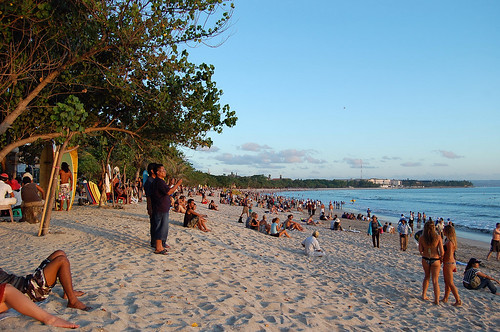
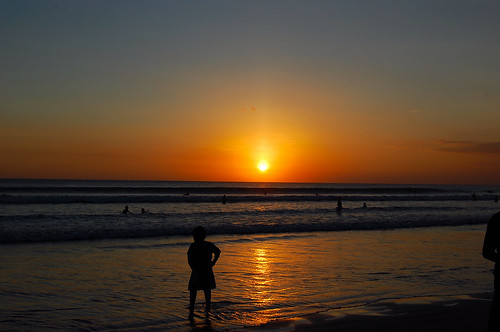
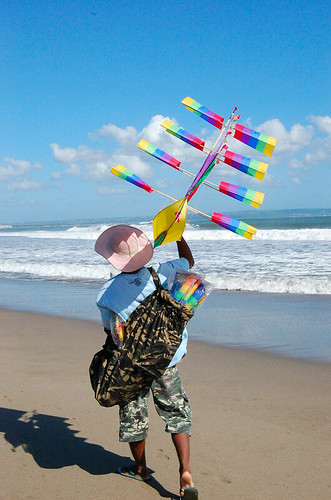
Slowly encroaching into Legian territory is Kuta beach, which is like Legian or Boracay or (enter name of any popular beach here) on steroids. It is a surfer's paradise, where everyone comes for the cheap rooms and cheap eats and the all-night boozing and partying. It is generally loud, frenetic and overly crowded. Hawkers cram the tree-lined path next to the road selling refreshments and souvenirs. Across the road from the beach is a multitude of budget-friendly establishments and alleys leading to hostels. The beach is no less beautiful though and we were fortunate enough to catch our last Bali sunset here (photo below) before heading to the airport.

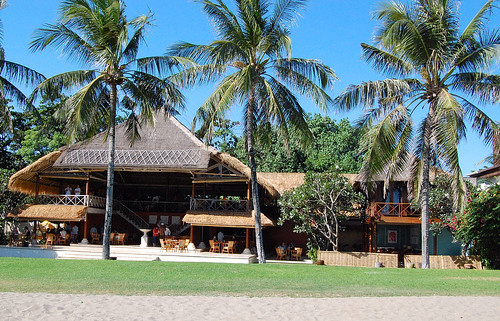
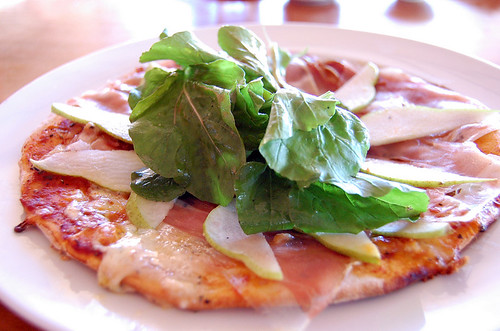
We hiked up the dunes towards the popular La Lucciola, a classy beachfront restaurant recommended by an Australian lady we met. It was mid-afternoon and we had some time to kill before heading to Ulu Watu temple for the sunset so we had some cocktails. Rina & I shared a gorgeous prosciutto, apple and gorgonzola pizza topped with arugula. It was thigh-slappingly good! I washed it down with a blueberry margarita, which turned out to be very interesting.
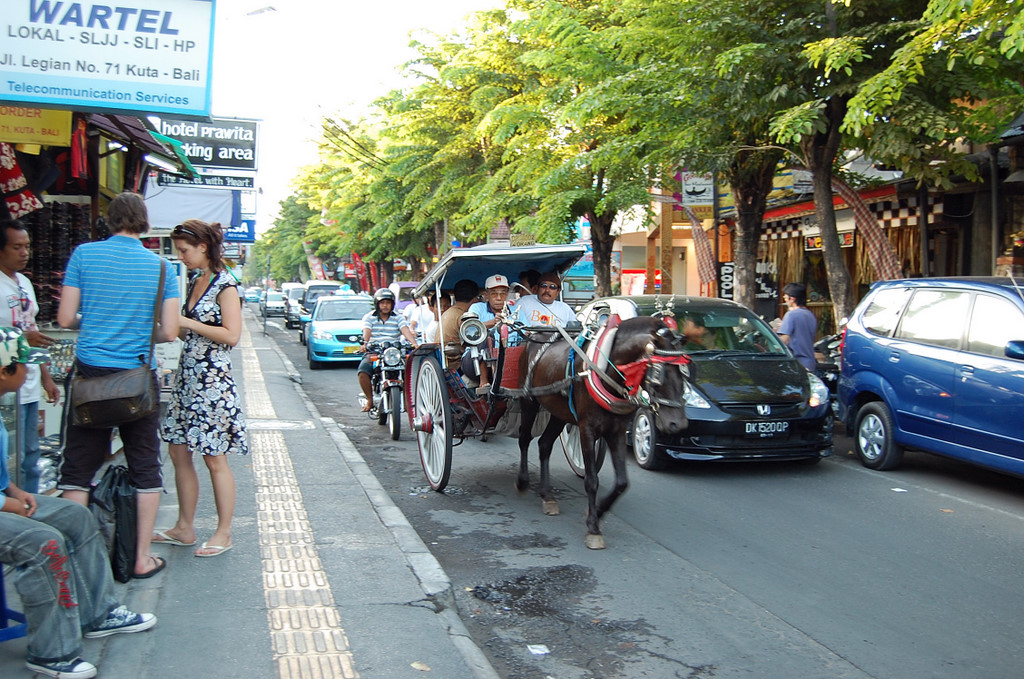
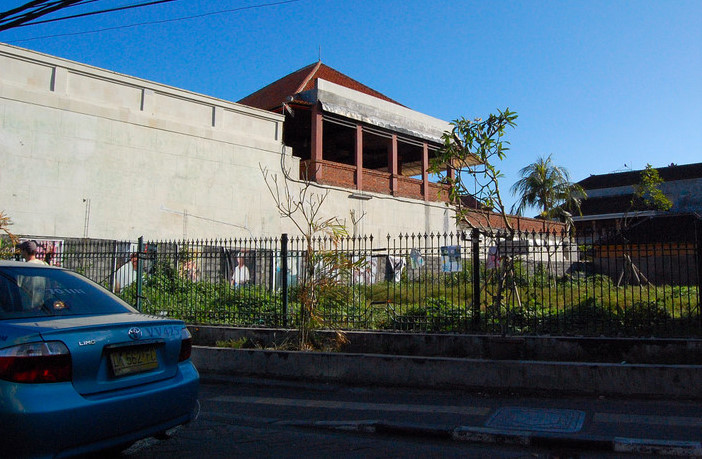
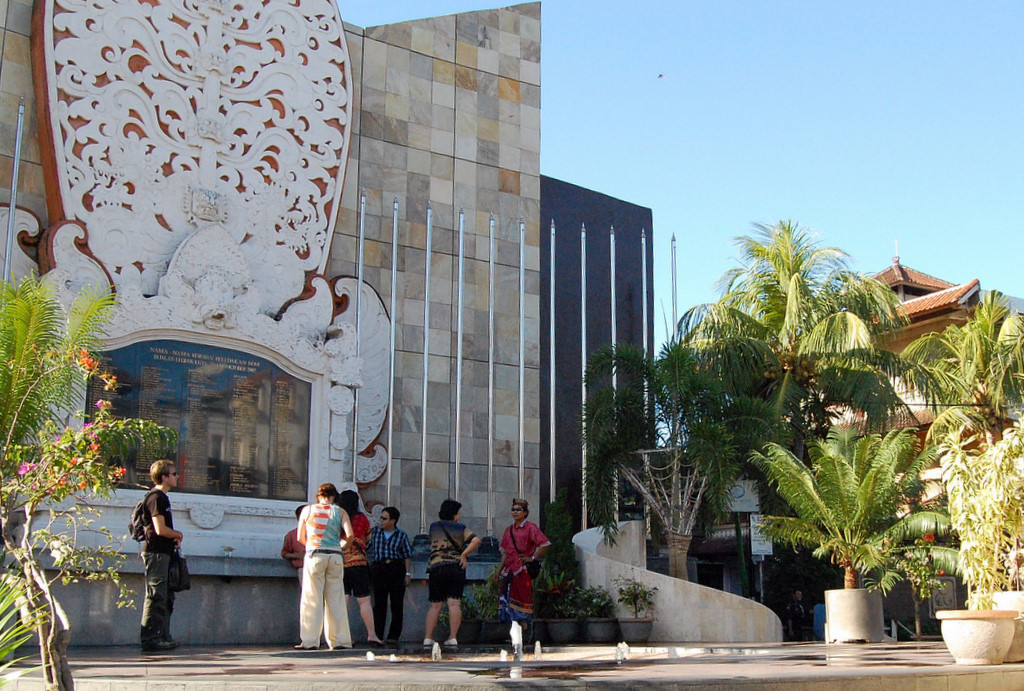
Bikini-clad girls and guys wearing nothing more than board shorts and flip flops filled the sidewalks, among them Indonesians from Java selling their wares and plying their trade, yes that of the fleshy kind included. Gusti pointed out the vacant lot where the bomb went off on Oct. 12, 2002 killing over 200 people. Those who lost their lives are honored with pictures on the perimeter wall and at the memorial across the street. I felt deeply saddened for the innocent people who met their fate here and said a silent prayer for them as we drove away.
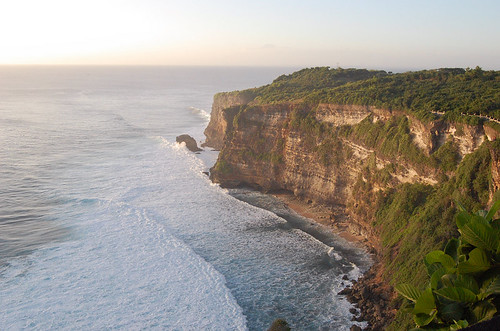
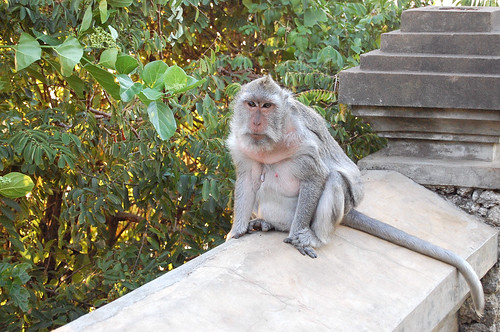
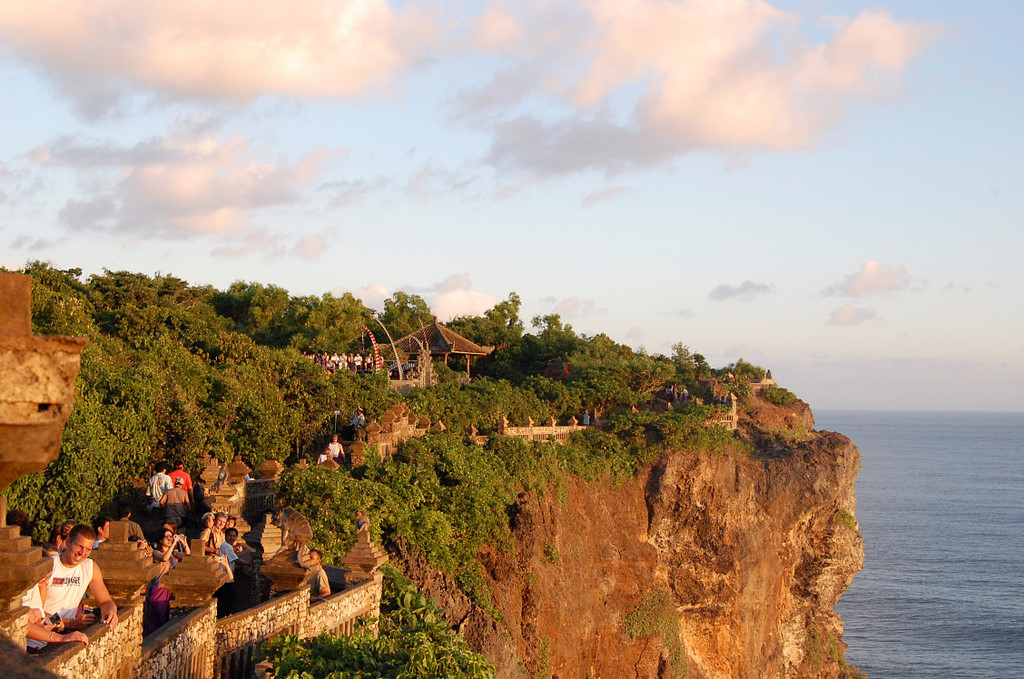
The Pura Luhur Ulu Watu is a multi-tiered structure of thatched roofs and is one of Bali's directional temples. It is perched precipitously on a cliff where it wards off evil spirits from the southwest. It is especially famous for it's unique sunset. A stone wall snakes along the cliffs on both sides of the temple. We walked along both walls, enjoying the view of the temple from both sides. Gusti rapped his stick on the ground to scare away the monkeys who dared approach us. Whenever one got too close, he protectively shielded us from it with his body and hissed at it while waving his stick menacingly. We felt safe. The other tourists were not so lucky. A guy next to us had his sunglasses swiped from his face and I spied a monkey running away with someone's camera case.
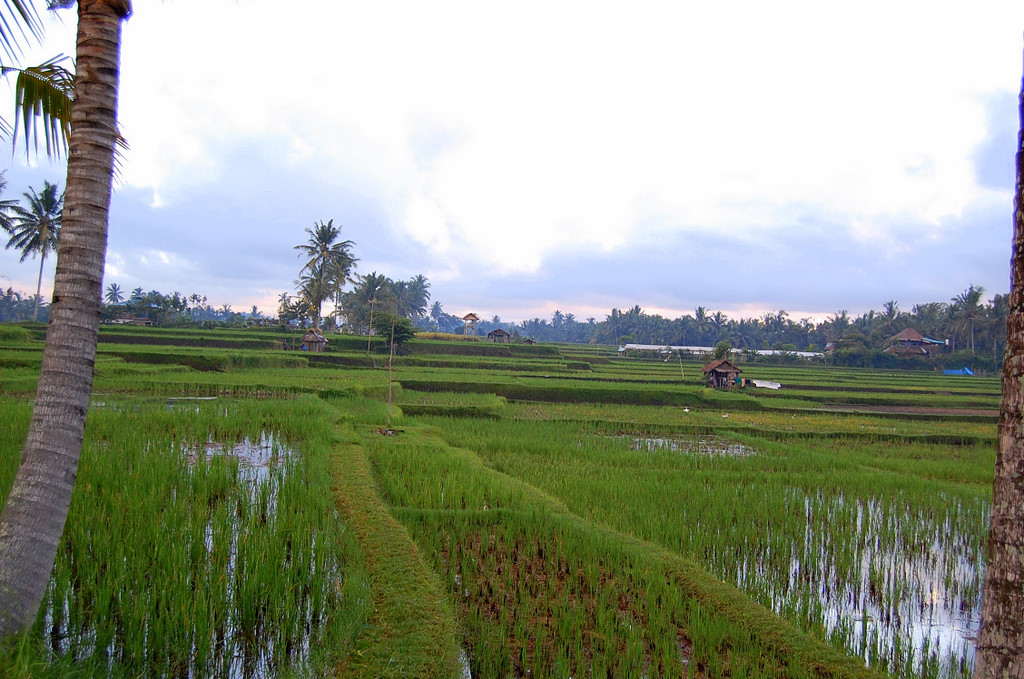
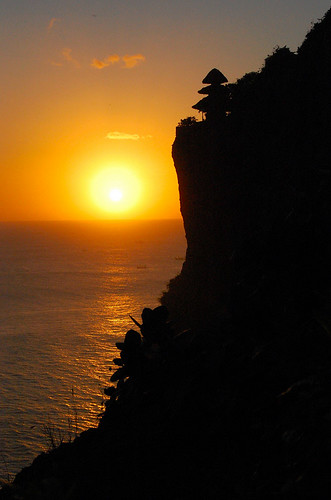
The sunset was indeed spectacular! The temple was silhouetted against a sky painted shades of pink, purple and red. It was a shame we couldn't stay longer for the Kecak or ancient fire dance. We still had to drive to Jimbaran for dinner and we didn't want to end too late. We had a 6 am walking tour of the rice paddies the next morning.
And this concludes my Bali series. I hope you enjoyed it as much as I loved to relive it by sharing my stories. :)
July 4, 2007
A lesson in Balinese cooking
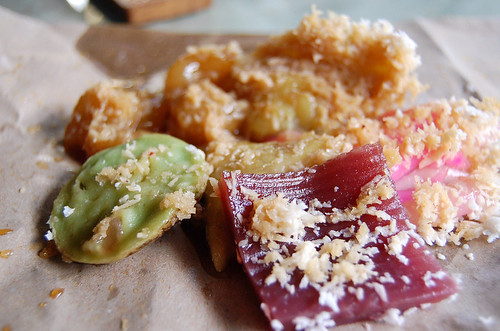
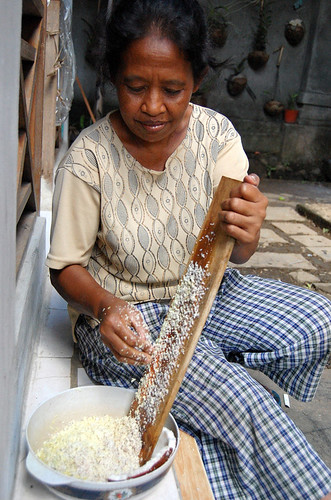
glutinous rice treats
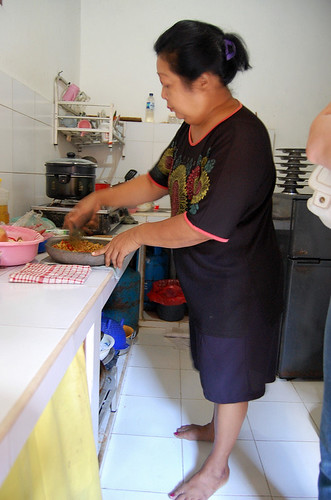
I'm not a morning person but on this day I could have fooled you. We were up at 5:30 and out the door by 6 am ready for our wee-hours-of-the-morning market jaunt with Cok Sri (pronounced chawk sree), the Balinese woman who would be instructing us on her local cuisine today. Even the roosters aren't up yet!, I thought. Rubbing the sleep off our eyes, we stumbled over to the front desk where we were soon met by Cok Sri, who for some reason instantly brought to mind many a scary school teacher from my past.
Aside from sambal, the other dishes we learned to make were:
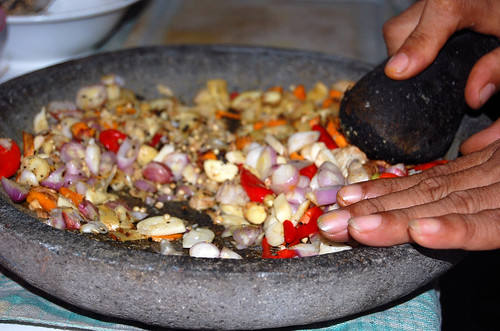
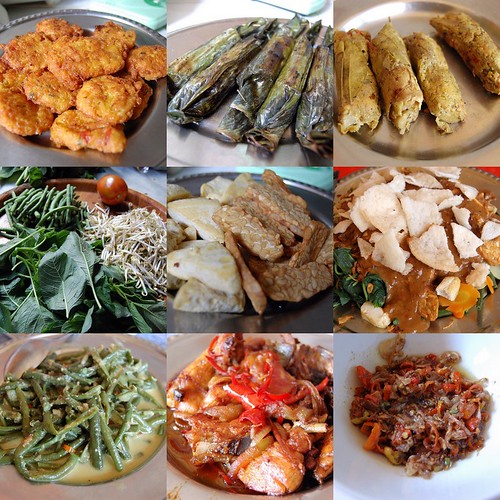
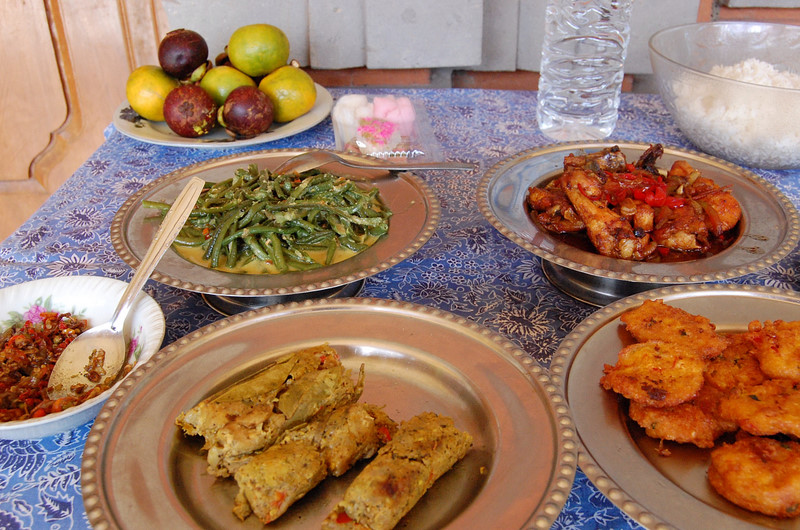
Ikan Pepes- Tuna wrapped in banana leaves. The chunks of tuna were coated in a paste of turmeric, galangal, shallots, garlic, lemongrass ginger and chili then wrapped in banana leaves with a daun salam (local bay leaf) leaf tucked in. (The daun salam , tree is a member of the cassia family; its leaves impart a mild spciy/woodsy flavor). The wrapped fish is then steamed then grilled on a pan.
Perkedel jagung - Indonesian corn fritters. This was hands down our favorite! They are made with shallots, nutmeg, chili and garlic and then deep fried to perfection. We were eating them hot off the fryer, and eating it like popcorn.
Ayam Goreng - Spicy fried chicken. This is her children's favorite, Cok Sri tells us, and I can understand why. The chicken is fried with garlic, chili, onions and tomatoes then glazed with kecap manis. Kecap (pronounced keh-chap; derived from the Cantonese word for sauce koe-chiap form which the word ketchup was also born) manis is sweet soy sauce infused with palm sugar which gives it it's syrupy consistency. Kecap asin on the other hand is the regular soy sauce we are familiar with.
Long beans in coconut milk - I don't know what this is called in the local dialect, but it was delicious. I've always loved local cuisine cooked with gata or coconut milk. This one was redolent with the sambal Cok Sri prepared, galangal , shallots and garlic.
Gado-gado - of course what would a Balinese or Indonesian cooking class be without this vegetable dish. Gado-gado loosely translates as "potpourri" and that it is. A potpourri of vegetables tossed with peanut sauce and topped with shrimp crackers. In it she also added pre-packed tahu (tofu) and tempeh, a staple food in these islands. Tempeh is made by fermenting half-cooked and dried soybeans with a starter yeast. It has the texture of nougat and the same nutty taste as tofu.
top row: pergedel jagung; ikan pepes; ikan pepes unwrapped
middle: veggies for the gado-gado; tahu tempeh for the gado-gado; gado-gado
bottom row: long beans with coconut milk; ayam goreng; Bali sambal
Menara Home Stay
Ubud, Bali
08-805-626-518
July 2, 2007
Ubud Palace and Café Lotus
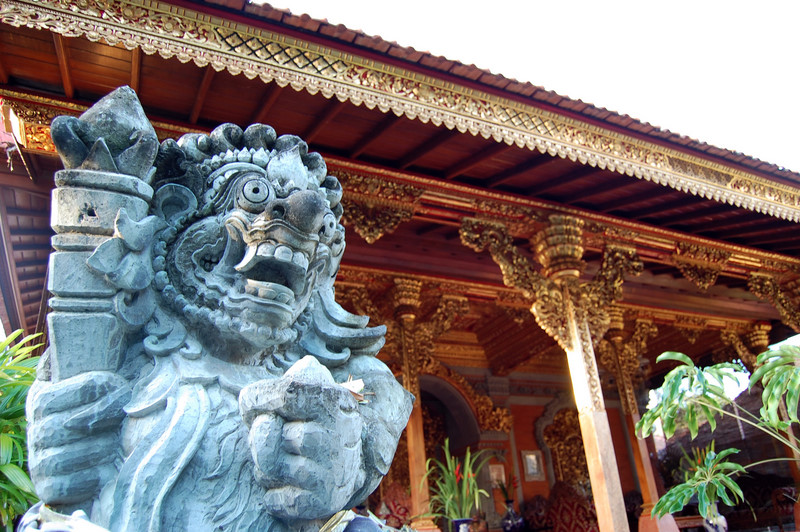
There were the requisite gold leaf and ornamentation fit for royalty, and the intricately carved wooden doors and stone structures were especially awe-inspiring. But I couldn't help feel a sense of harmony with nature as I walked through the grounds and among structures built with mud, stone, bamboo, teak, thatch roofing, livened up by a variety of foliage and plant life with frangipani scattered about. This was the stuff those glossy Balinese-inspired coffee table design books are made of. By the time we traced our steps back to the street the rehearsals had started and we lingered for a short while, enjoying a sneak peak into what was in store for us that night, though at another venue.
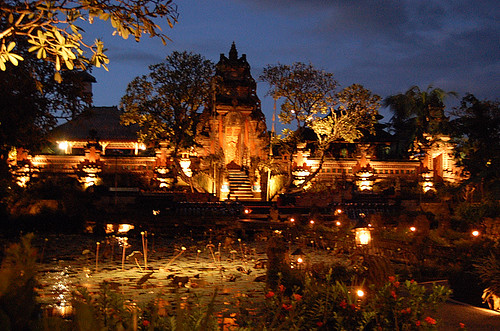
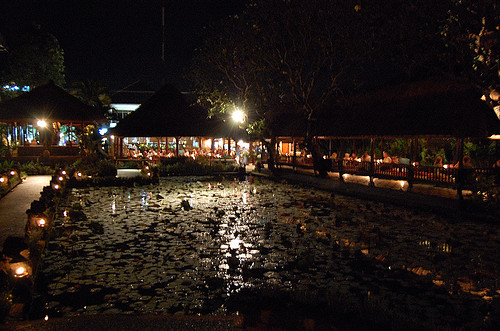
After a quick shower, we followed the path from our bungalow through a private back gate that opens up to the lotus ponds of the acclaimed Café Lotus next door for our pre-booked dinner and gamelan performance. The Café Lotus has to be one of the most remarkable restaurants on the island, not only for it's delightful menu of traditional and Western fare but especially for it's unrivaled ambience and views. The restaurant has two dining areas: the main area up front with standard chairs and tables and an elongated raised platform with low tables on bamboo mats and cushions that runs alongside one of the lotus ponds.
the view of the stage and temple from our table at Cafe Lotus
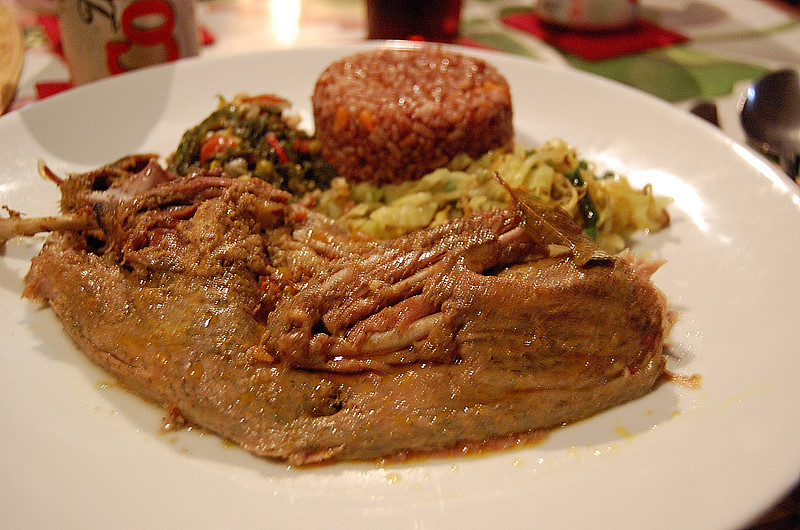
I ordered the Bebek Betutu, described on the menu as a half duckling basted with fragrant herbs wrapped in banana leaves and cooked underground for 12 hours. It was fragrant indeed and oh so tender, which I suppose is a result of it's rather unique cooking method. Rina chose the Be Pasih Goa Lawah, fish fillet marinated in turmeric, lemongrass, tamarind, garlic, shallots, chili, kaffir lime leaves and garlic.
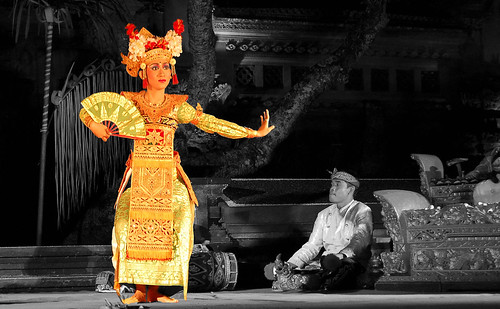
The facade of the stunning Saraswati temple is used as a backdrop and open stage for the regular performances held here almost nightly. Diners have the option of watching the performance across the ponds while they dine or having an early pre-show dinner and then transferring to the seats set up in front of the stage for a close-up view. As per Catur's advice we chose to do the latter and I'm so glad we did. It would have been a shame to miss out on the choreographed movement of eyeballs, fingertips, heads and toes.
So after polishing off a shared dessert of plantains in palm sugar and toasted coconut, we made our way to our seats. It was a spellbinding show on a spectacular night marred only by nasty flesh-eating mosquitoes (I swear, all insects love my blood!). So while hopelessly trying to swat them away, I watched the stories unfold before me in music and dance.
For 50,000 rupiah (less than $6), we were treated to 7 acts by the Chandra Wirabhuana gamelan orchestra. The first was part was an overture performed solely by the gamelan that was divided into two groups on either side of the stage. The piece was called Cerukcuk Wana and the delicate percussion sounds mimic those of the melodious Cerukcuk bird song.
The basic gamelan orchestra is made up of a series of xylophone-like instruments known as gangsa and brass gongs. Both of which are struck with a mallet to produce deep resounding notes. Also typically used in a gamelan are bamboo flutes, cymbals and double-sided drums or kendang that are beaten with the palm of the hand or fingers.
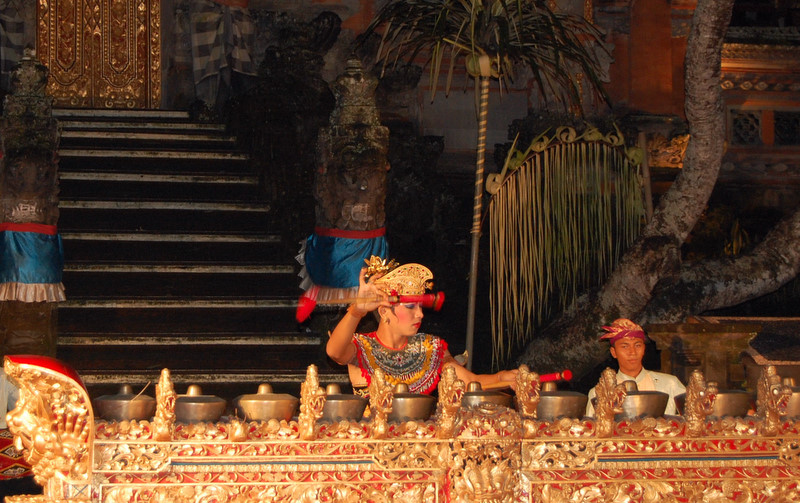
For the second act, the first of many female dancers came out from behind the shadows. She plays Chandra Wangi, a pure teenage girl formed in the image of the Goddess of the Moon who brings peace and harmony to all. Her costume and head piece are adorned with gilded ornaments and she moves with precision to the tempo of the music from the gamelan, jerking her head this way and that; her eyes darting left and right are so full of expression no words are needed; and her hands gesture meaningfully. She is mesmerizing. And I almost forget to take photos.
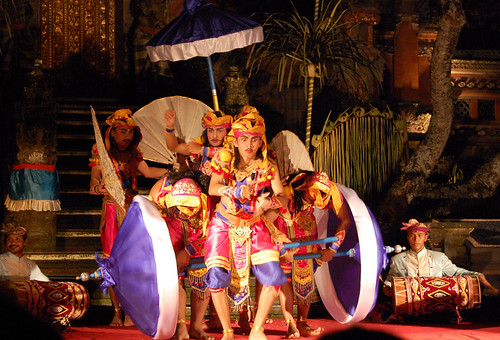
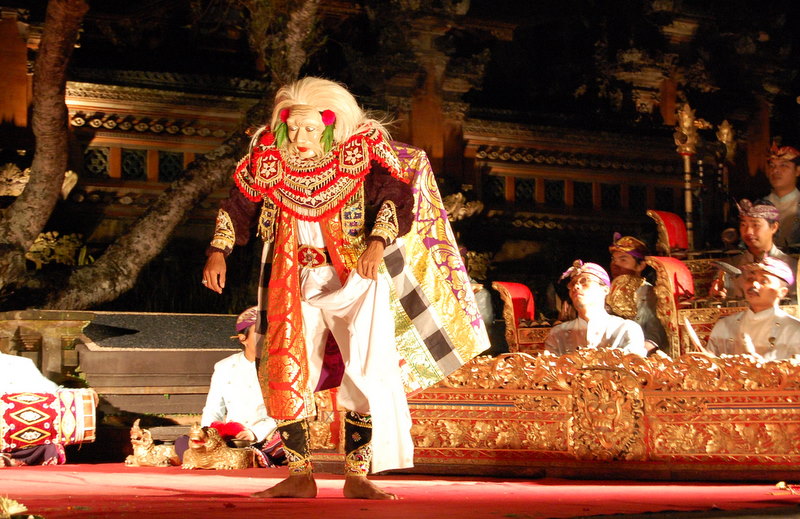
In Bali, dancing is not only done for one's own pleasure or for entertainment, it is also a means to commune with the gods. The different dances are categorized into secular or sacred, with the latter reserved for mystical rites. What we witnessed on this night were secular dances such as the mask dance and the tari satya brasta which is a battle scene based on an excerpt from the Mahabharata (below).
Rina and I both agreed that most impressive of all was the third act, the kebyar terompong, whose star performer stunned us all as he executed the dance with impeccably choreographed eye-hand-neck movements while he played the terompong. On his face is the unmistakable range of expressions from curious shyness to pain to sadness and coy flirtation. This is human coordination at it's best!
We continued to watch as more stories unfolded before us on this nippy night. By the time the show came to an end an hour later, we were lulled into a completely restful state. I could see the faint light in our bedroom from where we sat and I wanted nothing more at that moment than to be tucked in and cruising through dreamland.
Café Lotus
Jl Raya Ubud, Bali
Tel. (0361) 975660
www.lotus-restaurants.com
June 26, 2007
A labyrinth of scents and color
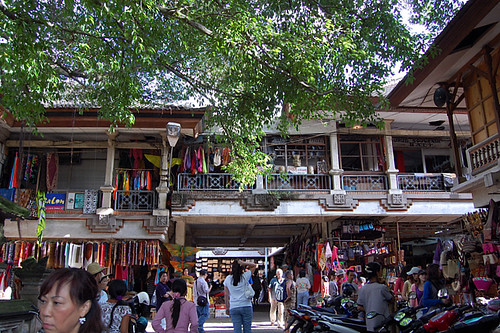
Also along Jl Raya and no more than a 2 minute walk from the Bungalows is the Ubud Market. This was easily one of the places I was most excited to visit. In fact, we went to the market three times, once every day that we were there. Marilyn, the sweet lady manager of our bungalows, taught us an invaluable lesson in one of her many emails to me before my trip: always start your haggling with 30% of their asking price, you will usually end up agreeing at 50%. They are always willing to sell even at the smallest of profits, if they don't agree to what you're willing to pay that means it really is too low.
Armed with this strategy and some techniques I've learned through the years in dealing with persistent-to-the-point-of-being-downright-rude vendors under my belt, I proceeded with confidence. Looking back now I realize I should have expected it but during that first visit, I was taken by surprise when we found ourselves dealing with some of the most amiable sales people in the world. With each stall we passed I felt my guard come down a notch until it was gone. There was none of the hassling and tugging and glaring (when you wouldn't buy) that I expected. Sure, some were gently persistent but reasonably so. They were trying to make a living, after all.
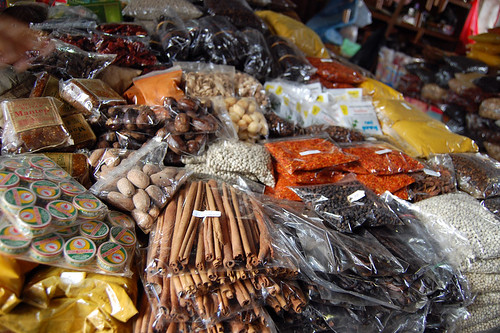
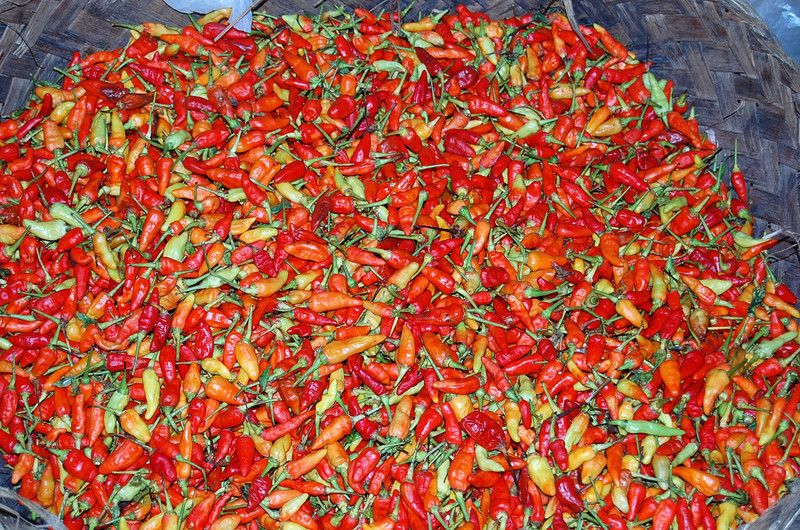
they don't call these the Spice Islands for nothing
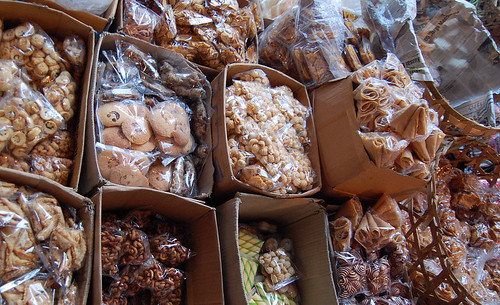
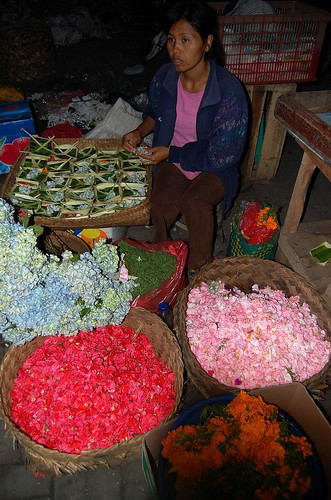
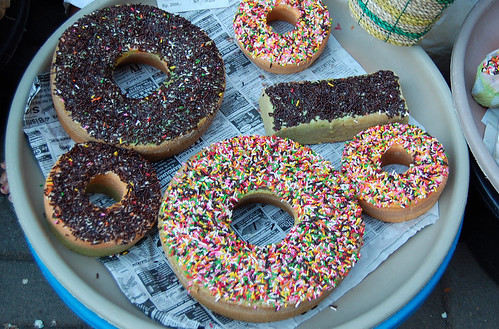
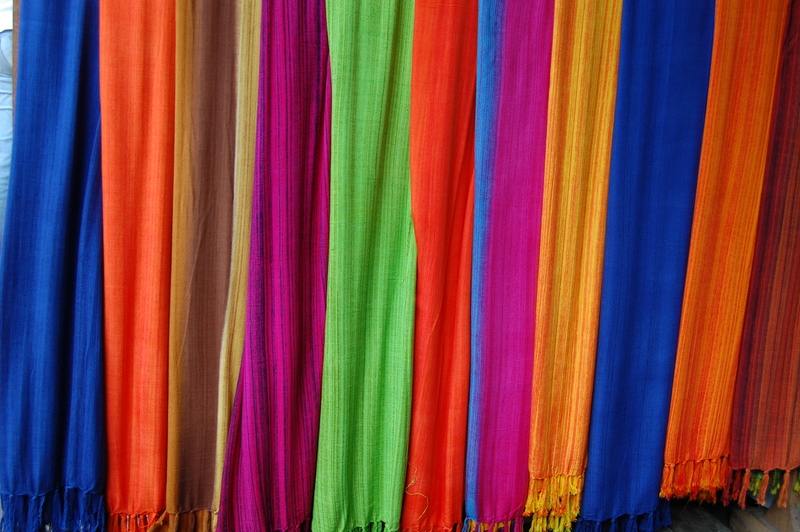
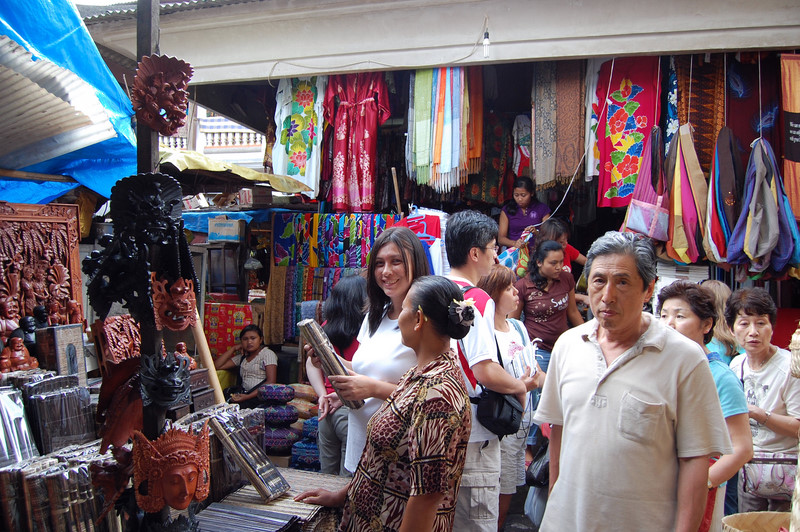
What did come in handy was the haggling strategy! There isn't much you won't find in this two-story marketplace, you could shop to your heart's content. I should have listened to Marilyn when she told me to "bring an empty suitcase!". If i wasn't so worried about excess baggage expenses, I would have bought an empty suitcase there (yes they had those too) for everything that I wanted to buy. There was saffron and sarongs, masks and mats, art and antiques, wood carvings and stone carvings, hammocks and handbags, guitars and gongs, paintings and plates, kites and curry. And this was just the ground level. Out in the courtyard, we stumbled onto heaps of fresh produce, donuts the size of frisbees, a mountain of chilis, flowers used for offerings and more sarongs. The second level was a maze of batik fashion, table linen, shoes, bags and toys.
in my best Cookie Monster impression: "COOOOOKIEEEEEE!!!""
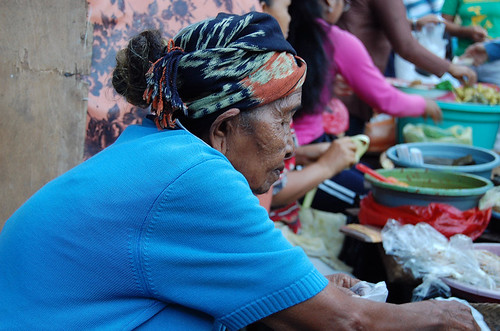
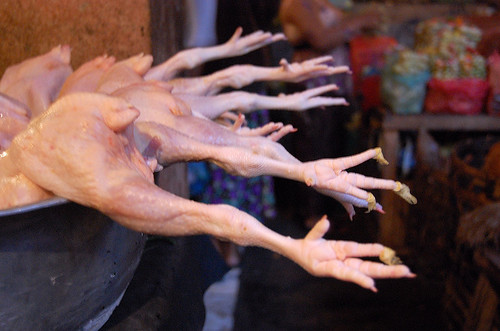
A pre-dawn shopping trip for ingredients for our Balinese cooking lessons allowed us to witness the market at it's busiest. Fish and fowl and pig and greens abound, and yet surprisingly there is no stench. It was still cold and dark out, but already the market was abuzz with women from Ubud and nearby villages filling baskets balanced on their heads with foodstuff to feed their families for the day. In a traditional Bali home, there are no refrigerators because everything is bought fresh every day. The few items bought in slightly larger quantities to last a few days are onions, shallots and garlic. I love this concept, it's so... French Women Don't Get Fat .
Who you calling chicken legs?!
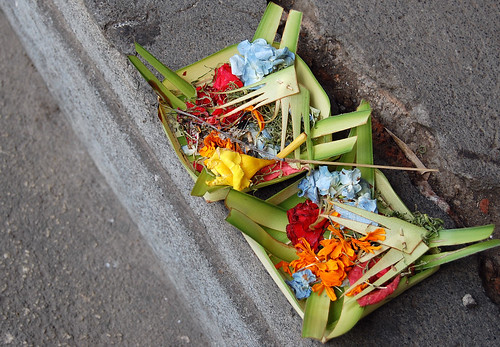
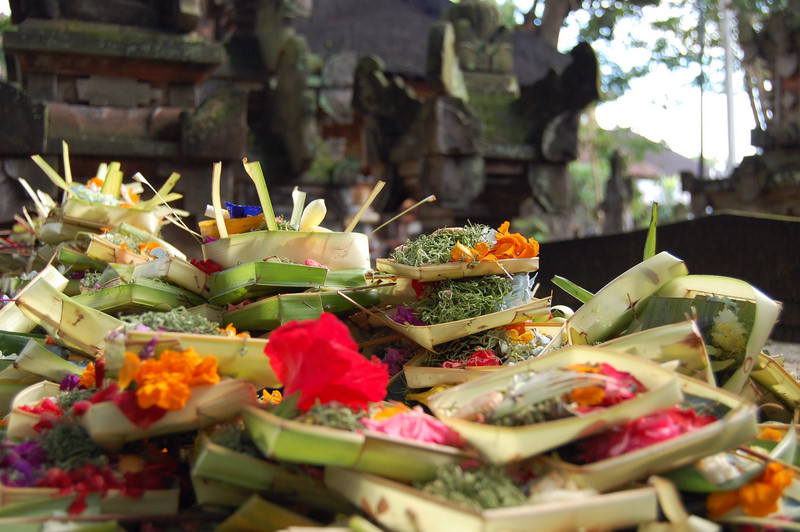
Assembling offerings for the day
Last picture added especially for Rowena ;)June 25, 2007
Mystical island
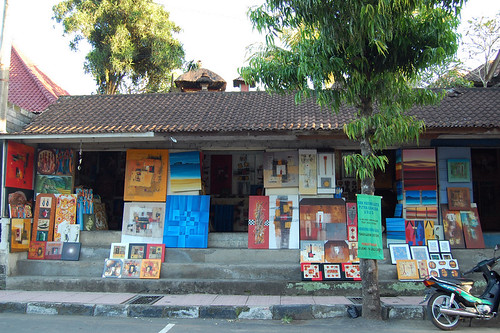
Jl Raya is dotted with bookshops, cafes and money changers but the sidewalks are dominated by art galleries on both sides. The entire village seems to generate creative energy. Paintings spill out onto sidewalks as vibrant testaments to local talent and men, women and children alike are seen everywhere honing their craft, drawing their inspiration from the beauty of their surroundings.
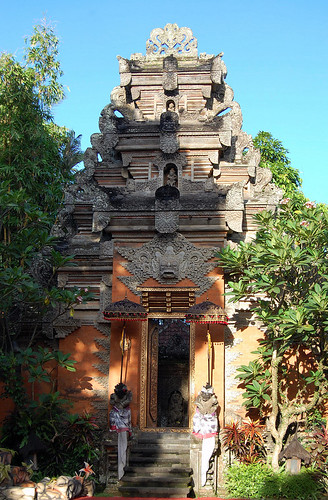
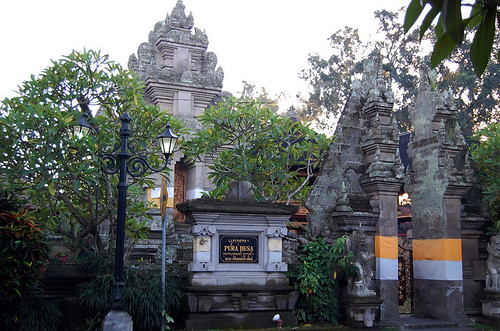
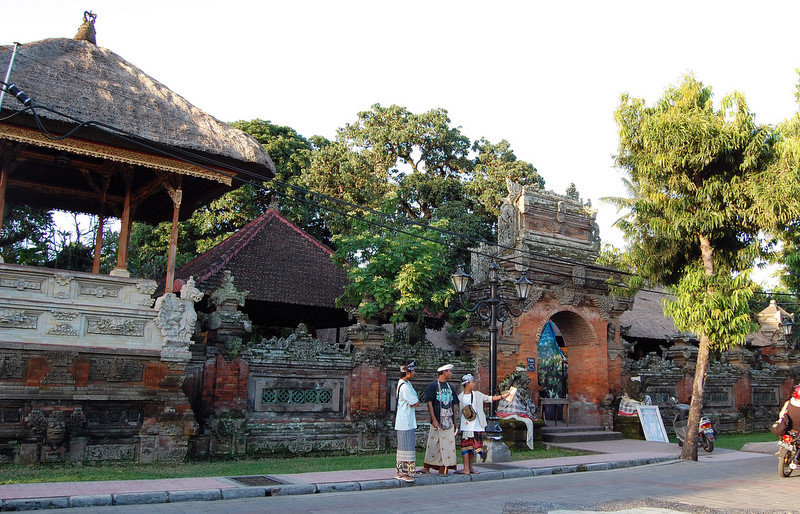
I was intrigued mostly by the intricacy of Balinese architecture, specifically temple architecture. The split gate or candi bentar became an increasingly familiar site. We had seen many of them during our ride from the airport and then now again on this main road. The gates, such as those of the Pura Desa temple below, seemed to beckon to us to pass through and discover what lies beyond. The split gates represent the two halves of a mountain, a symbol of holiness, and symbolising the splitting of the universe.
Gusti, our driver/guide/bodyguard (against naughty monkeys) explained to us that every village has at least three temples- one each for Brahma the Creator, Vishnu the Preserver and Shiva the Destroyer, and that every family, clan or organization has one as well. It is no wonder then that Bali is called the land of a thousand temples.
We found the Balinese to be an extremely spiritual people; Hindu practices and spirit worship combine and make for a life that is wrapped up in the performance of rituals, sacred dances and festivals as well as meditation and prayer. With their unique version of Hinduism comes a strong belief in karma and to this I attribute the kindness and generosity they showered on us from the onset and all throughout our time on the island. Their awesome attitude was just astounding!
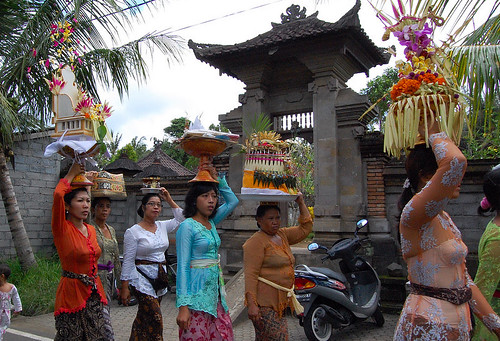
more elaborate offerings for the gods
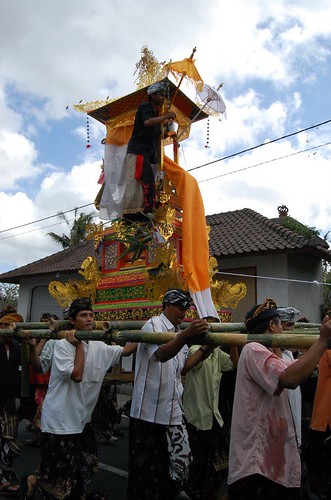
We considered ourselves very fortunate to witness two colorful processions in which the remains of a deceased on a decorated cremation tower are carried by pallbearers to the cremation grounds. To the Balinese, death is a joyous occasion as it frees the mortal soul until it is reincarnated in another form.June 20, 2007
Puri Saraswati Bungalows
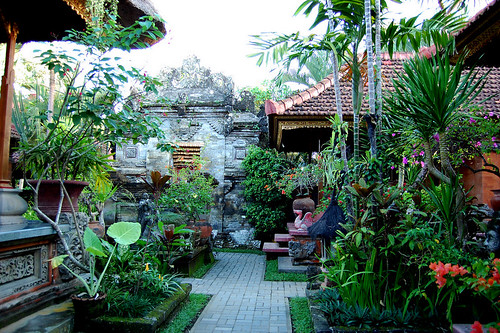
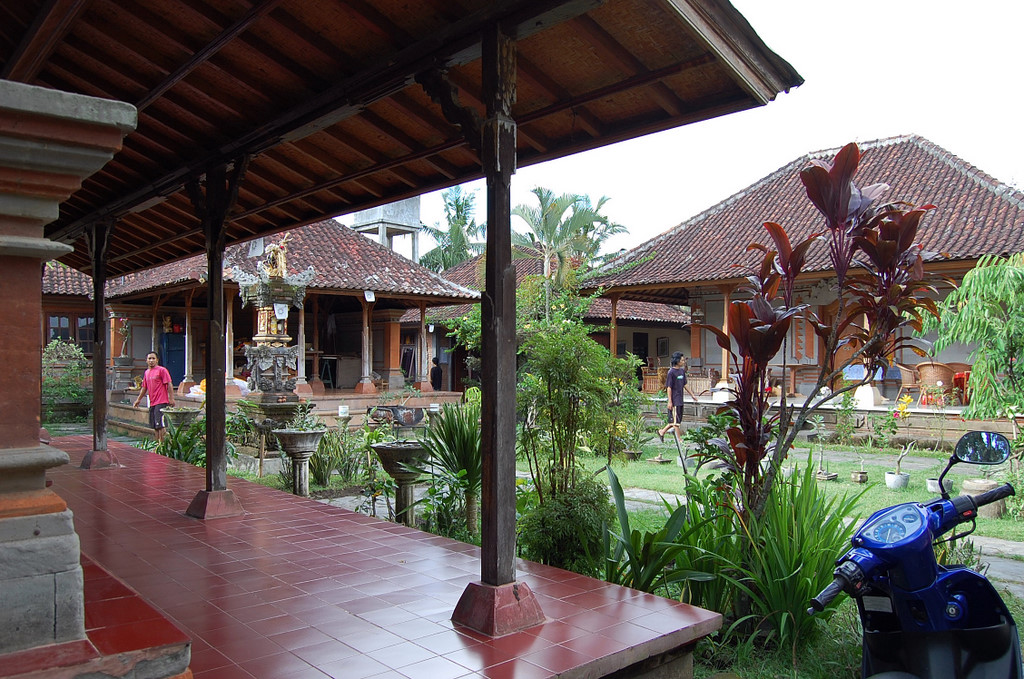
Our home in Ubud was the Puri Saraswati Bungalows which is located right smack in the center of the village, just a stone's throw away from the Ubud Royal Palace, the Ubud Market, the Puri Lukisan Museum and the Pura Desa Temple. It shares a perimeter wall with Cafe Lotus and Ubud's main temple complex both of which can be accessed via a private pathway directly from the bungalows.
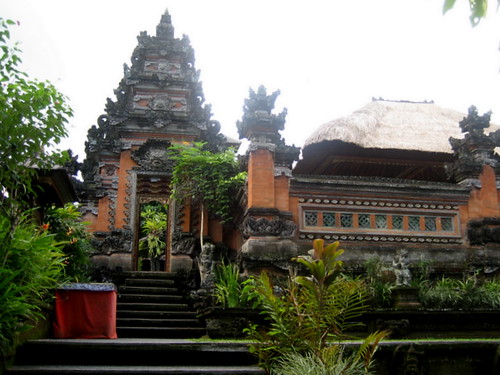
Pura Taman Kemuda Saraswati,
Ubud's royal family temple behind our bungalow
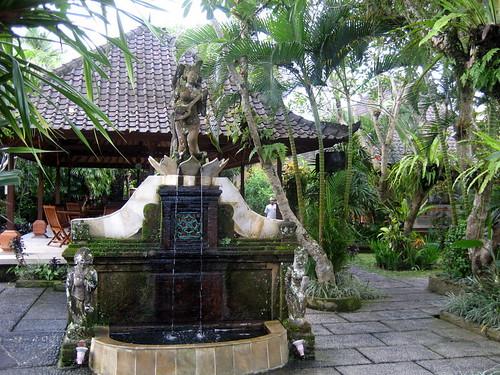
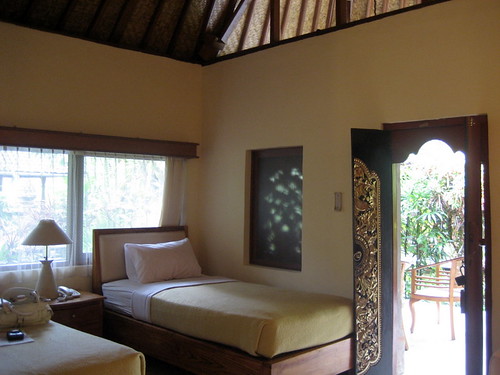
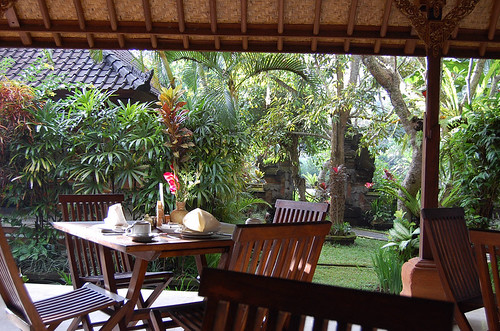
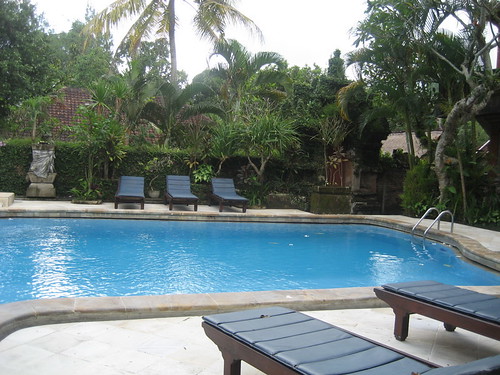
The bungalows are set in a serene garden environment, each with a private verandah ensonced in lush foliage. Every morning, offerings are placed on the verandah steps to ensure the well-being and happiness of guests. Now, wouldn't that make you feel special? The rooms are modern and sparsely furnished with no distractions such as TV or radio and very comfortable.
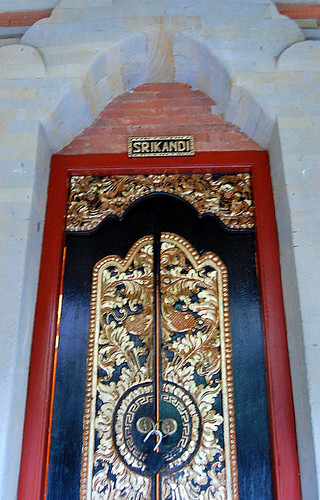
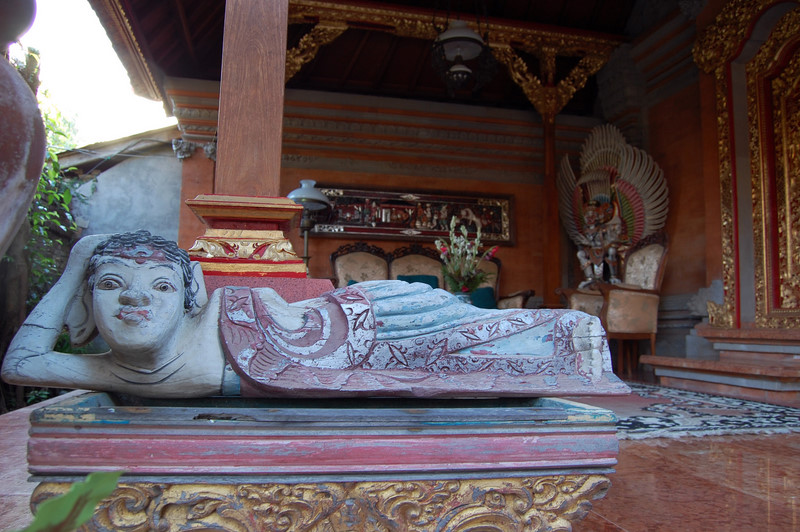
the intricate gold-leaf carved door that opens up to our modern bedroom below
Every night we were lulled to sleep by the chanting of frogs outside the window and every morning we woke to the lilting sounds of the gamelan orchestra practising at the temple next door. Like wind chimes, the melody of the gamelan is so soothing that once it turned what was supposed to be a quick power nap in the morning into a full blown 3 hour siesta.
the breakfast bar,
that's our bungalow on the left hidden behind the plants
Now here is where it gets really special! To stay at the Puri Saraswati Bungalows is to be a guest of the royal family. The bungalows are built on palace property and on what was once a garden playground for the palace children and their friends. Today, members of the royal family make their home on the grounds and go about their lives much like ordinary folk. Once while waiting for our driver to arrive, we watched the prince's wife feed their baby on their balcony.
The sprightly lady whom I recognized from the framed picture hanging on the wall behind the front desk as one of the King's wives, cheerfully waved at us as we ate our toasts and banana pancakes in the breakfast bar. It is this same good nature and warm-heartedness extended by the rest of the staff that made us feel right at home and made our stay here so memorable. They were just delightful! I've never met a more gracious and charming bunch and I cannot say enough good things about them.
PS: A million thanks to Anne who recommended this place to me! :)
Puri Saraswati Bungalows
Main Rd. Ubud, Bali Indonesia
Tel. (62-361) 975164
Email: purisaraswati@yahoo.com ; Website: www.purisaraswati.com
June 15, 2007
Bali High
The forty minute ride from the airport to the town of Ubud was absorbing. Rina and I stared out the windows of the hotel car, rubbernecking, trying hard not to blink lest we miss something. Most of the time we were trance-like and speechless but once in a while there was an audible sharp intake of breath from either one of us, and an occasional shout to "look at that over there!" or "hurry, check this out!" as we jabbed our fingers against the glass pointing at something out-of-this-world unusual or beautiful outside. This type of exchange between us was repeated many times over during our short trip.
Bali is steeped in tradition and the Balinese are extremely spiritual and talented folk. Art and ceremony is part and parcel of daily life here and the best place to experience all this is in Ubud, a town in the middle of the island, where the culture and people have not been tainted or ruined by outside forces. Here everyone is an artist in one form or another, be they dancers, painters, sculptors, musicians, actors, batik designers or puppet masters. So this is where we chose to stay, in the heart of it all.
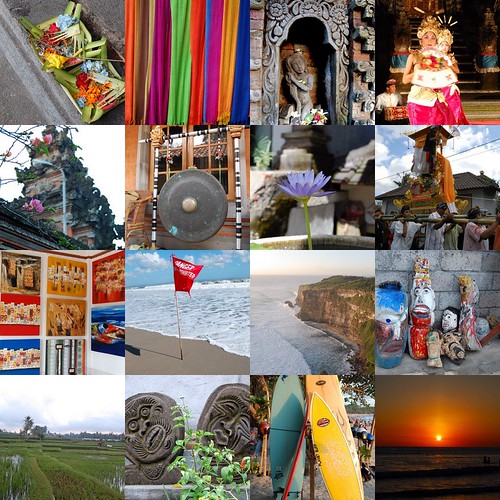
Bali is magical. It is an island full of wonder and surprises. And we tried to drink in as much of it as we could in such a short time, but in small languorous sips, the way you would fine wine. My succeeding posts will be dedicated to this enchanting island and my romance with it. Please bear with me as I linger, I'm not ready to come down from this high I'm feeling. :)