Showing posts with label bohol. Show all posts

April 25, 2008

Other reasons to visit Bohol

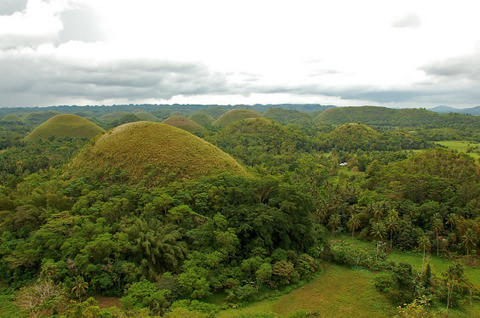
rounded chocolate hills

Aside from the churches and ancestral houses, there are of course other reasons to visit Bohol. Here they are, in no particular order:

The Chocolate Hills : No visit to Bohol would be complete without seeing this peculiar landscape that has been declared a National Geologic Monument. Our hike up a couple hundred steps to the viewing platform is rewarded with a view unlike any I've ever seen before. Some hills were pointy and conical and some were rounded but they all appeared to be of the same size. They looked like scoops of matcha or green tea ice cream garnished with sprigs of mint and parsley. Actually more like pistacchio. Two of my favorite flavors! I pictured it in the summer when the hills dried up and turned brown like chocolate (hence the name). B & I watched in amusement as on-site photographers directed tourists in funny poses over the hills, making them jump high on command while straddling a broom so it looked like they were witches flying over the hills. One could also choose to 'surf' over the hills, or shoot an arrow like cupid. Make sure you check out the photo samples on display, they're a riot!

The hills, over 1,200 of them spread over 50 sq km. across several towns, continue to puzzle geologists and there are a number of theories regarding it's formation (see under Origin here). But like a magician who never reveals his secrets, Mother Nature likes to keep us mystified.
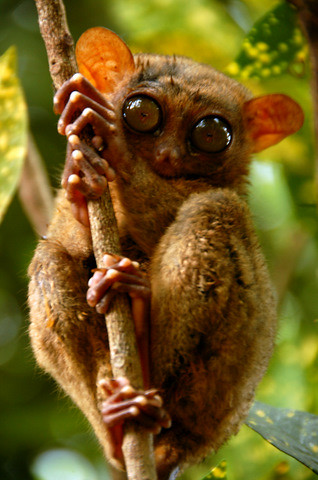
cute tarsier

The Tarsiers:

Aww the tariers, such adorable little primates. Seeing them for the first time was actually a bittersweet experience for me. On our way back from the Chocolate Hills, our driver pulled up in front of a small shack at the side of the road, "to see the tarsiers", he said. We followed him inside past the souvenir shop to what looked like a tiny greenhouse. There was a small crowd milling about and peering into the trees and plants, snapping away with their cameras. It didn't take me long to realize that this was it, and I was already surrounded by the tiny creatures. So I searched the bushes until I found one, and there it was snuggled on a branch, eyes half-closed. It was the cutest thing ever! It couldn't have been much bigger than my hand. I saw about 10 more. All teeny-tiny, furry, big-eyed precious little things. They had frog-like fingers and heads that could freakishly swivel 180 deg! I took photos as B fed one a skewerd bug that was promptly snatched and stuffed into a tiny mouth - crunch, crunch.

But the cuteness stopped there. Nothing else about this scenario amused me much. In fact, I felt a flood of sadness for these sweet things held captive away from their natural habitat. As a carefree kid I kept all sorts of animals at home: parrots, fish, rabbits, mice, hamsters, hens, name it. But I have long since disposed of the fish tank and bird cage. But this wasn't just about animals in capitivity for our amusement (I can even tolerate this when it's for educational/ research purposes), but tarsiers are nocturnal animals. If they're 'working' like this during the day, when do they sleep? :( I really hope they're cared for well over there. Otherwise, tarsier viewing should be limited to the Tarsier Sanctuary in Corella which is under the auspices of the Philippine Tarsier Foundation.
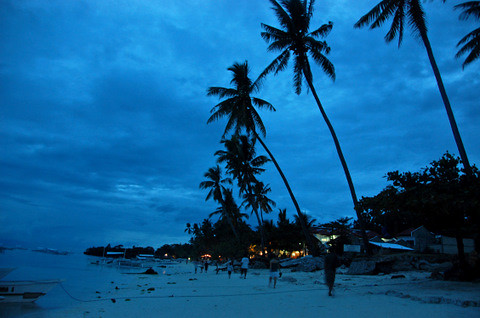

alona beach, panglao island


Alona Beach

I know I said this particular trip to Bohol wasn't about it's islands or beaches but we couldn't resist. We couldn't have chosen a better place to have dinner after a long day on the road. Alona beach at twilight was like a salve to my senses. It is a beautiful stretch of beach lined with resorts and restaurants sans the maddening crowds that usually plague more popular beaches in the country. B & I wound down with a nice barefoot stroll before settling down at the Coco Vida restaurant for a lovely seafood dinner. We picked some fresh fish, prawns, corn and fruit which they prepared according to our preference while we waited, enjoying the live Americana folk music from a local trio. The food was more than we could normally consume, but it was great and we managed, washing it all down with a couple of beers. Ahh...I'm definitely coming back and staying here next time!
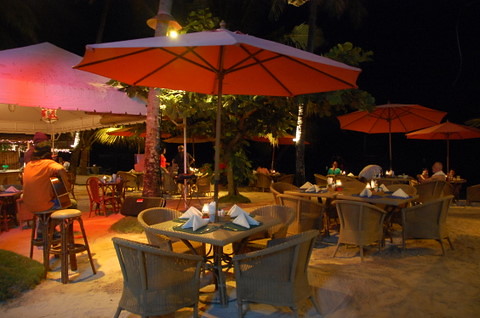
panglao island

And speaking of food:

Bohol has it's share of culinary delights. One of my most memorable meals aside from the seafood dinner in Alona beach were the turo-turo (literally point-point) style lunch we had in a carinderia (eatery) outside the Loboc church. I can't remember what everything was called but it was all delicious. We sampled and took home local delicacies such as calamay hati- a sticky sweet concoction made with coconut milk, sugar, and ground sticky rice sold in smooth coconut shells; peanut kisses - very addicting cookies (shaped like Hershey's kisses hence the name) made with peanut and eggwhite; Bohol torta - a sweet cake; ube kinampay (purple yam) - which I found to be lumpier, and not as sweet or creamy as Baguio's Good Shepherd ube which I have a fierce love for but it was pretty good, the puto-maya is not unique to Bohol but it was special because it was sold to me by these adorable kids outside the Albuquerque church, puto-maya is sticky rice boiled with sugar and coconut.
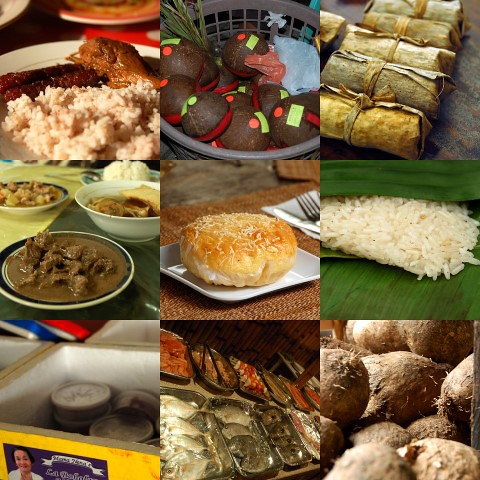
Boholano food

Top row: native chicken & longganiza, kalamay, tsokolate tablea
Middle row: carinderia-style lunch in Loboc, Bohol torta, puto-maya
Bottom row: ube kinampay, fresh seafood on Alona beach, ube

And then there's Osang's broas. These are by far the best broas (ladyfingers) I've ever had. They are super crisp and light, almost feathery, melt-in-your-mouth heaven! I was thrilled to no end that you could watch them make the broas right there. There were only four women at work in the small bakery. I watched as the mixture was piped onto sheets of tin, baked by charcoal in a clay oven, and then scraped off the sheets and turned over on a grill to crisp and cool before being packed into brown paper bags. A very uncomplicated process using conventional baking equipment and methods. The entire place of course smelled of butter and sugar and all that bakey aroma I wanted to bottle up. I bought as much as I could manage to hand-carry in the plane (you don't want to crush these delicate things in your check-in luggage!). They were still warm from the oven when they were handed to me and I handled the bag like a first-time mother would a frail newborn baby.
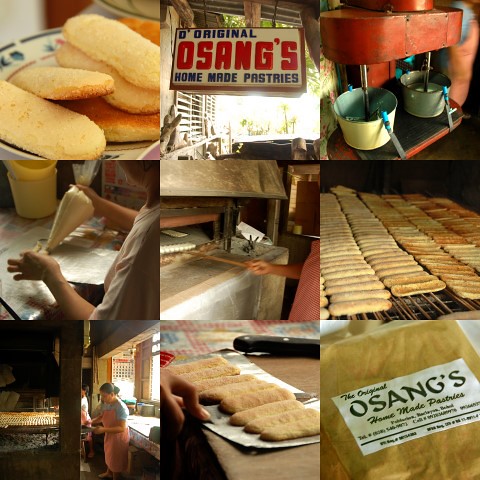
Osang's broas

The Buzz Cafe

I thought it would be charming to stay at the Bohol Bee Farm on Panglao Island. But that was before the unfortunate incident at the Great Wall of China. Bees don't like me. Considering how much honey I guess I shouldn't be surprised. Maybe that bee in China is some kind of vigilante bee like Barry (Seinfeld's character) from the Bee Movie, but I wasn't taking any chances and decided to just visit the place for a meal and to buy some of their products instead of sleeping there. Unfortunately, we didn't even have time for a quick visit.

Upon realizing that we had some time to kill before heading to the airport on our last day, we opted to spend it at the Island City Mall in Tagbilaran. B & I both saw it at the same time - the sign for The Buzz Cafe of the Bohol Bee Farm. Yay!! I was going to have my honey and my chance to sample their food after all. The cafe is a sunny and charming country farmhouse style affair where you can also buy the farm's products such as honey, of course, home-baked bread, spreads, pure honeybee pollen, bee propolis, and their famous muffins (loved the corn and pumpkin the best but the cheese and carrot were great too). For merienda (afternoon snack), I ordered the kamote (sweet potato) fries with latik (caramel-like coconut milk sauce). It was delicious! I paired this with their signature corn coffee specially-brewed from roasted corn.
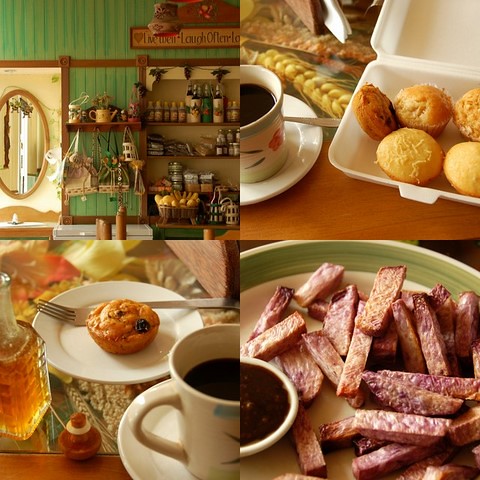
The Buzz Cafe by the Bohol Bee Farm

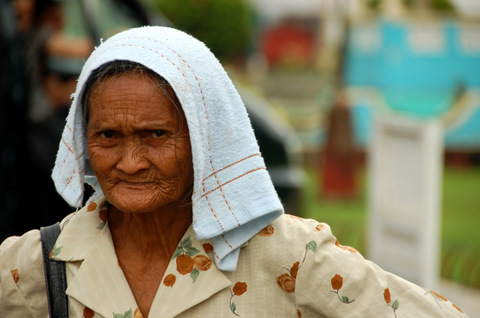
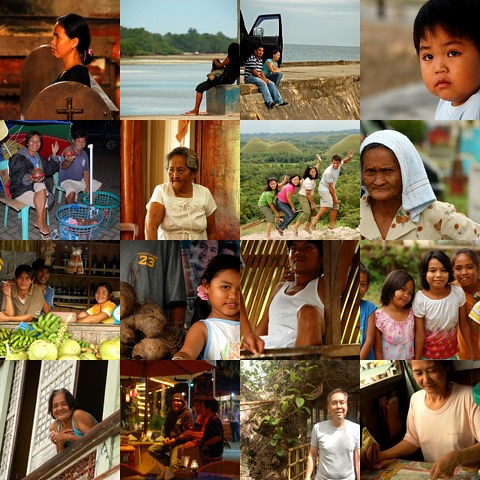
The locals. They Boholanos are a charming bunch. They have a deep sense of pride in their heritage, a trait I admire greatly, so they are more than happy to show you around and tell you tales. Everyone we met was warm and friendly and very down-to-earth. They remind me of the Dumaguetenos in many ways. :)

Boholanos

And on that note, I conclude my Bohol series. I will be posting a part two should i return in September for my friends' wedding (fingers crossed!). :)

April 22, 2008

Treasures of the past

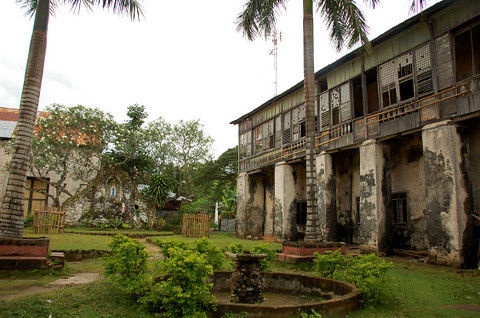
Just as with old churches, I am equally fascinated and doubly charmed by old houses. It pleases me even further when they are still inhabited by descendants of the original owners and not converted into a government office or restaurant or what-have-you. I still think about all those gorgeous ancestral homes in Silay (Negros Occ.) and how much I regret not setting aside time from work to venture beyond some of those iron gates, managing only to admire them from across the road or through the car’s dusty window.

So to say that exploring the ancestral homes in Bohol was a treat for me would be a gross understatement. It was quite the honor. When you cross the threshold of an ancestral home, you are never just a tourist satisfying a curiosity. You are, above all, a guest of the family and of their forefathers.

We learned much of what we know about the BAHANDI or Baclayon Ancestral Homes Association from our lovely hosts at the Mendez Homestay, but also from a lady we met who operates a homestay of her own. It was in her living room where she recounted how the ancestral homes along the main highway were threatened by demolition due to a road-widening project. So in 2002 the BAHANDI (bahandi is actually Visayan for treasure or inheritance) was founded to protect these homes. Thanks to their tireless efforts, not only were the beautiful houses spared from the wrecking ball, but so was the cultural heritage of Baclayon. Today the BAHANDI continues to organize local cultural events, support locals engaged in traditional arts and crafts, conduct educational campaigns on culture and history in schools, and advocate the preservation of historic buildings.
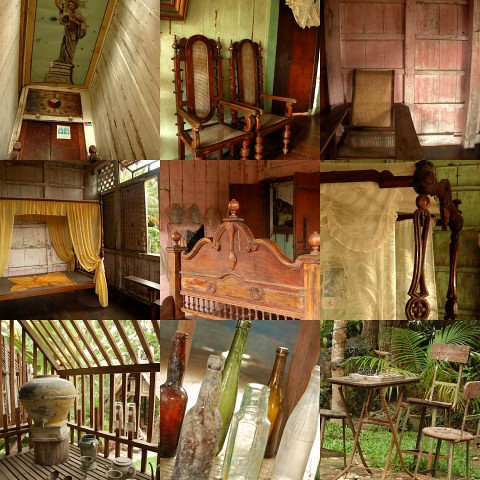
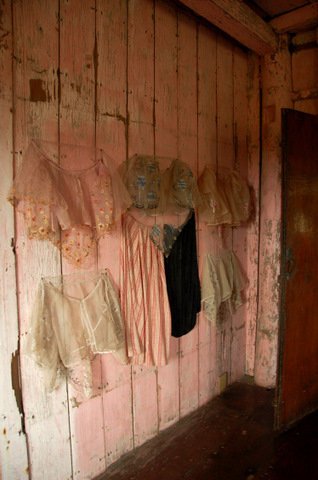
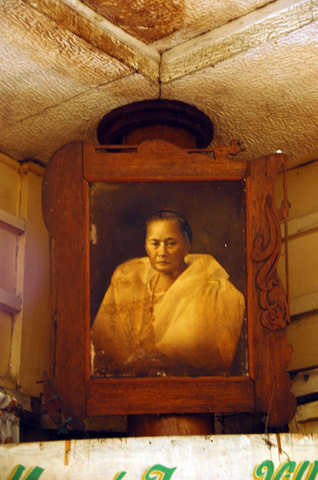
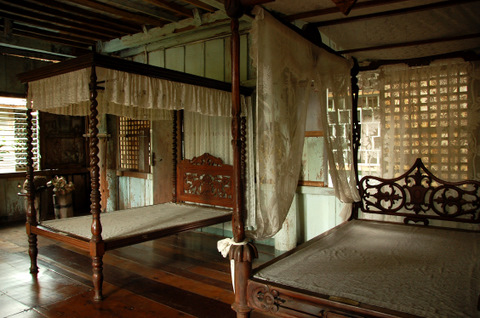
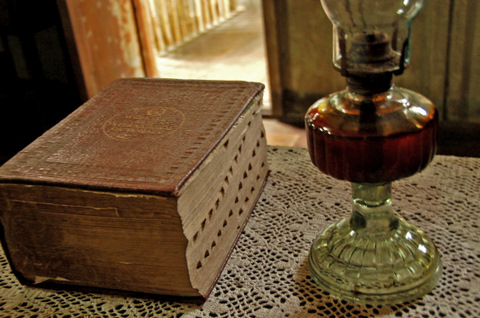
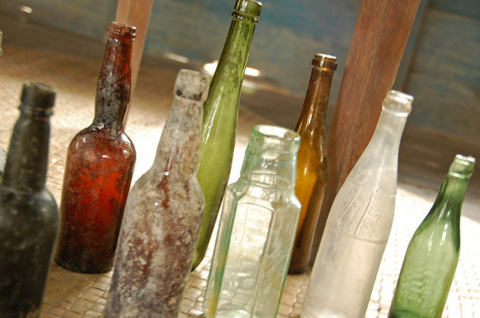
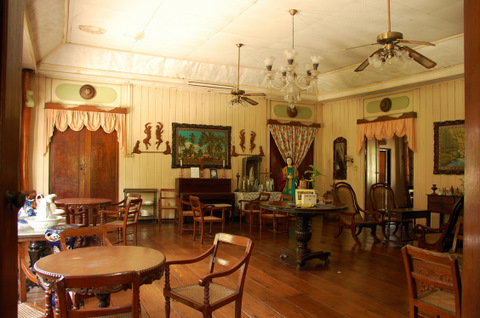
Everything in the house tells a story. Even the width of the hardwood floor planks reveals the wealth of the family (the wider, the wealthier). But best of all are the stories you weave together from the personal mementoes left behind by generations past: the frayed baros carelessly hung on the walls; the worn piano keys and chess sets; framed portraits and sepia-toned photographs, rickety furniture you wouldn’t dare sit on; gorgeous aparadors next to canopied beds, doilies underneath antique porcelain figurines; religious icons that came in sizes smaller than my thumb to taller than my 6 ft. dad; books that threatened to trigger my allergies if I so much as lay a finger on them; vintage green and amber glass bottles, chipped clay pieces, walking canes and other odds and ends.

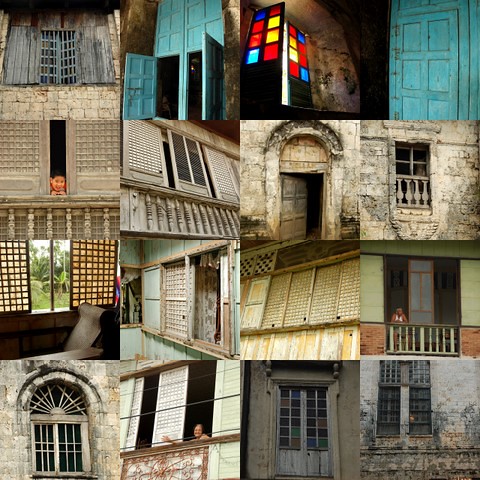
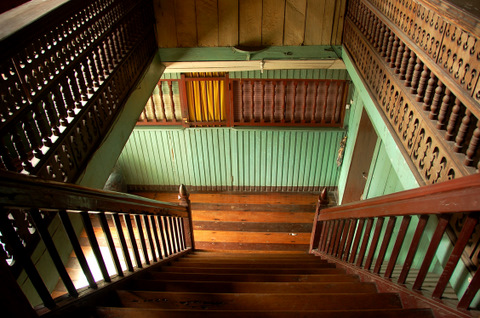
Most of the houses are of typical bahay-na-bato design, with the use of stone limited to the lower level for the foundation. The upper levels are built using wood, bamboo and other native materials. A staircase (a showcase in itself) leads you up to the large and airy main room with high ceilings. This is the most important part of the house serving as both dining and living area, and from where large doors lead into the bedrooms and the kitchen. Window sills with sliding capiz & wood shutters make up most of the upper level facade with shuttered ventanillas (smaller windows) just below it decorated in pretty iron grillwork.

I appreciated the quiet grandeur of these stately homes; devoid of the lavishness that most ancestral houses elsewhere display. But I appreciated even more the respect the locals have of the gifts of the past and the pains they've taken to preserve them. With the mass development of suburbs all over the country boasting of modern and western designs, I take comfort in knowing that houses like these which make up our national identity are fiercely protected.

So here are the Baclayon ancestral homes we had the pleasure of visiting. The information I'm providing here is taken from chats with members of the family supported by facts found in the BAHANDI 2008 calendar. Each house is as unique as the stories they tell. Instead of trying to describe each one in detail (I'd have to dedicate a whole post per house if I did), I'll let the pictures do the talking, in the hopes that you are treated to an enticing sneak preview at the very least.

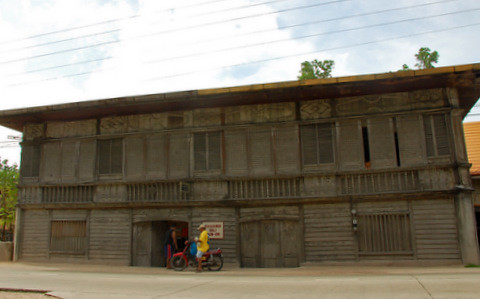
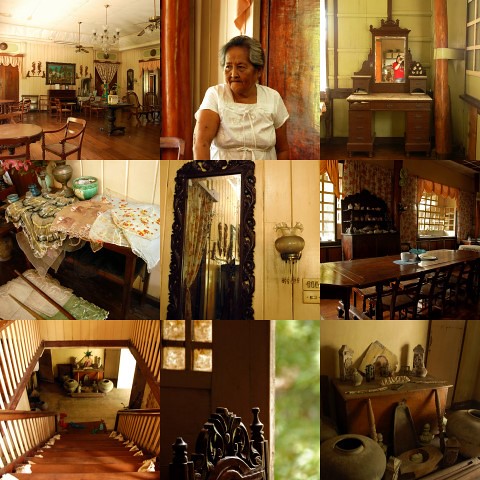
1. The Malon House is currently the home of 6th generation Malon family and was the site of many political meetings between former Pres. Carlos Garcia and Juan Malon who was then working at the municipal hall. It was originally T-shaped and built in the late 19th century, but the wing that extended into the sea was destroyed by a typhoon in 1968. The house had a large and sunny living room where I found amidst the timeworn sundries, chocolate tablea covered in dried leaves. Not a stranger to the delights of homemade tablea from the provinces, I asked if they were for sale and bought some to take home. It was a week later during a beach trip with friends that I used them up to make hot chocolate for everyone at breakfast and wished that I had bought more. (Poblacion; 2 Fan Rooms, 3 Beds at P600 per person. Contact: Ms. Cecile Camba 038-5409514 / 0910-3387033)

DSC_0322


collage6

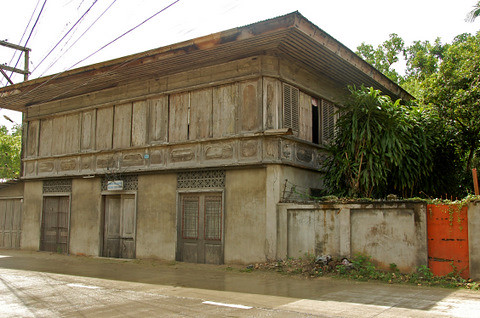
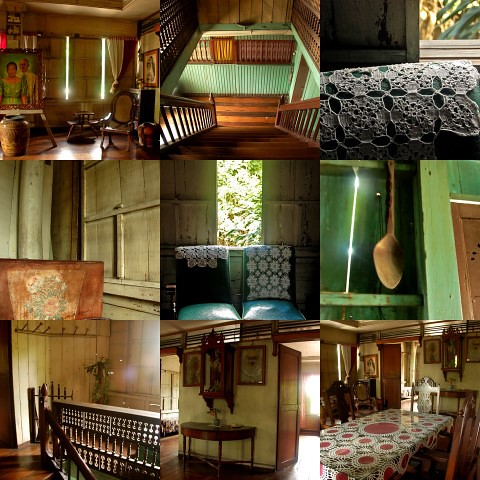
2. The Villamor House is one of the oldest ancestral houses in Baclayon, built by a trader, Ciriaco Villamor, in the late 19th century. The family lives in the Mangrove House (below) next door so the Villamor House serves mainly as a museum and homestay. From the kitchen window is a nice view of the mangroves and the Mangrove house. (Baliaut, Poblacion; 1 fan room/2 beds at P600 per person; Contact: Ms. Telly Ocampo 038-5409030 / 0920-2097558)

DSC_1136


collage9

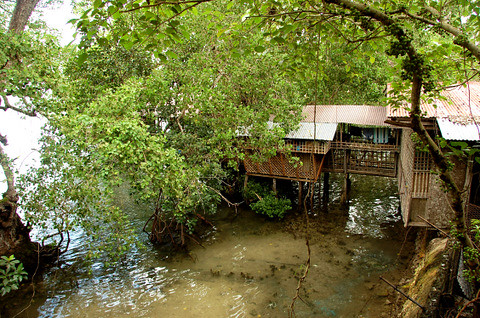
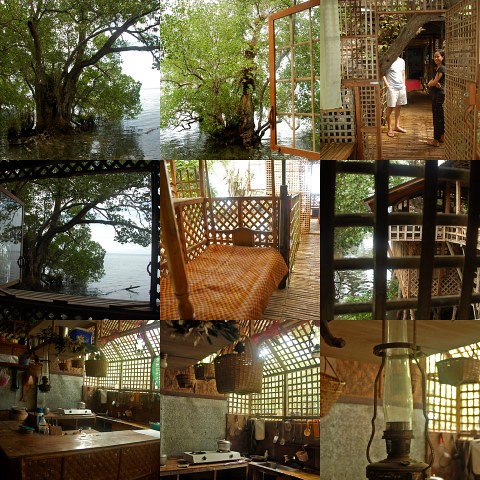
3. The Mangrove House is so called because the rear part of the house is built on stilts and is nestled in the mangroves. It is there in that hut above the murky waters where all BAHANDI meetings are conducted. To get to the hut on stilts, you pass through one of the most charming native kitchen I have ever seen (see bottom row of collage). (Baliaut, Poblacion; 1 Fan room/3 Beds at P500 per person; Contact: Ms. Telly Ocampo 038-5409030 / 0920-2097558)

Mangrove House

Mangrove House collage

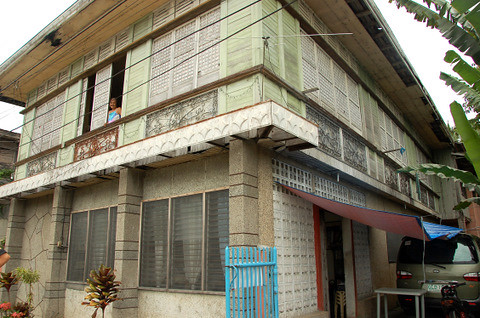
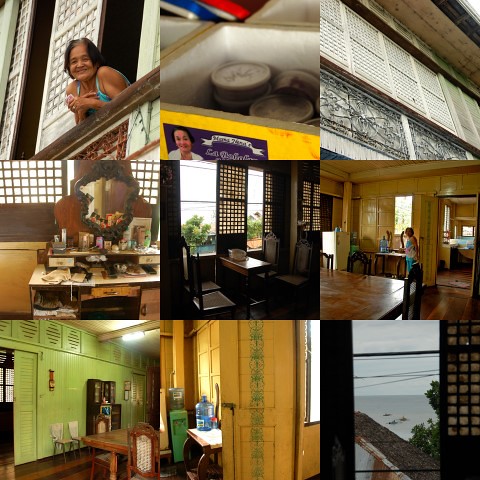
4. The Luza House is a large turn-of-the-century home of influential local merchant Fortunato Luza and his wife Maria Ginete. It is currently the home of Boholano artist Lutgardo Labad (who I spied outside in his garden) and where one goes to buy the famous Mama Nena's La Boholana Ube Kinampay. To be honest, it was the ube we were there for. We weren't planning to see any more houses that day, but when we emerged from the Luza's garage with our ube loot, the sweet-looking lady of the house called out to us from where she sat at an upstairs window. She invited us in for a quick look-see and who were we to decline. Unlike the other houses which were situated along the water's edge, this one was across the street and so the view from the second floor was the sea. I imagined that husband and wife spent hours sipping their coffee at that table by the window. (Poblacion, 2 fan rooms/3 beds; P600 per person; Contact: Mr. Gardy Labad 038-5409464 / 0916-3611786)

DSC_0908
collage8

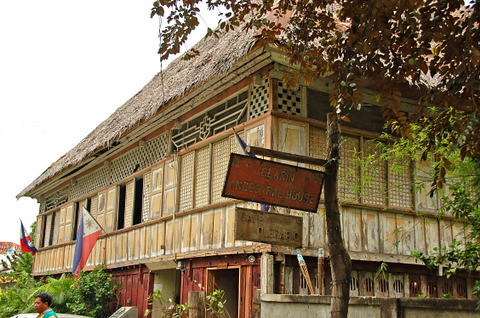
This last house, though not located in Baclayon and hence not part of the BAHANDI, is probably the most famous of all. It is the Clarin Ancestral Home in the town of Loay, not far from Tagbilaran City and en route to the Chocolate Hills. It was built in 1840 and was the home of Don Aniceto Velez Clarin, Bohol's first governor and his son Jose Clarin who was a former Senate president. The Clarin home was declared a heritage site by the National Historical Institute and is a must for visitors to the island. At the lower level is a coffee shop that extends to a peaceful garden, a perfect place to take a break from all the sight-seeing.

Clarin house

Clarin house collage

I've included the contact information for these homes should you be braver than I am (I'm a scaredy cat with an overactive imagination!) and would like to experience living in an ancestral home. If you'd like a list of the other homestays and their contact details, send me an email and I'll be happy to send it to you. :)

April 11, 2008

A tour of Bohol's historic churches

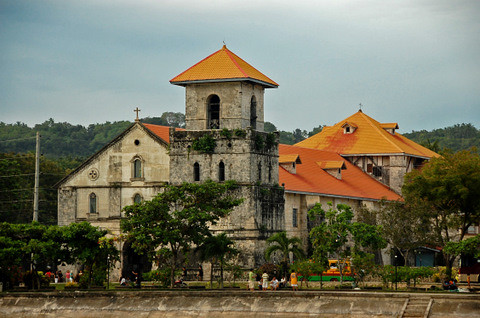
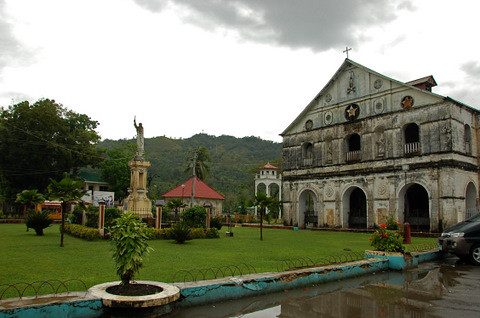
Baclayon Church

Baclayon Church

Choosing to stay in the town of Baclayon in Bohol proved to be a wise decision. Our homestay was only a 5 minute jeepney or car ride from the Baclayon Church while most of the ancestral homes we wanted to visit were also very close by. So after grabbing a bite to eat at the market, we crossed the road to the first stop in our tour of Bohol's churches.

#1: The Church of Our Lady of Immaculate Concepcion in Baclayon / Baclayon Church

Like the Paoay Church in Ilocos, the Baclayon church is a massive structure built with coral stone. There is some confusion as to whether this is the oldest church in the Philippines, because although construction only began in the 18th century, ancient religious relics found in the area date back as early as the 16th century - about the time the Jesuits were said to have founded the parish.

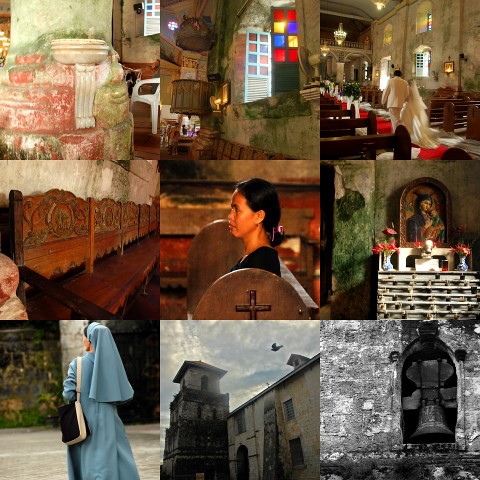
Baclayon Church collage

Scenes from the Baclayon church & museum compound

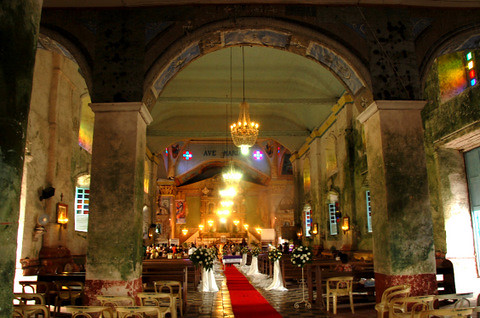
I emerged from the massive turquoise-colored wooden doors into what looked like a larger-than-life impressionist painting. The warm glow from the chandeliers danced with the rainbows of sunlight that shone through the stained glass windows, highlighting the walls which were mossy with the patina of age. A red carpet was rolled out over the black-and-white-tiled aisle for the couple who had just tied the knot and were now posing with their entourage at the altar. I kept my distance, not wanting to intrude on their moment. After saying a quick prayer from the last pew, I walked up the right aisle noting the intricately carved benches pushed against the wall. The entire church was a museum piece. But there was more to see at the real museum in the adjoining building next door, so we hurried to reach it before closing time.

It was a little eerie up there, walking on a creaky wooden floor amidst all these ancient relics and life-size religious statues. But the collection was impressive! How they managed to keep them in such good condition all this time is just as impressive. I especially loved the antique musical instruments and enormous music sheets on display. Unfortunately, we weren't allowed to take any photos, but if that helps to preserve these artifacts I'm more than happy to comply.

#2: The Church of San Pedro / Loboc Church

On our second day in Bohol, B and I hired a private car and driver to take us around. He was a very pleasant fellow who patiently waited for us at every stop we made on our road trip. After taking us to see the Chocolate Hills and the tarsiers, he drove us back through the town of Loboc where we had a quick turo-turo style lunch before visiting the Loboc Church. It had been raining hard again for most of the morning, but the rain gods were smiling down at us all weekend. They seemed to squeeze the rainclouds dry each time we were in the car, and then let up when it was time to get down at our stop.

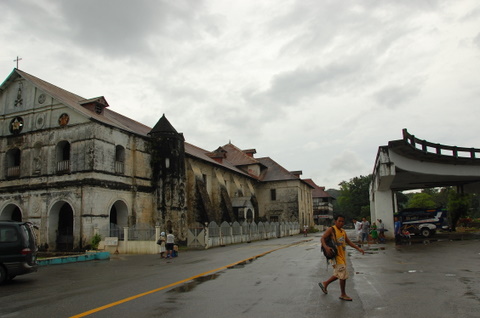
The Loboc church stands in front of a plaza, a few meters from the river that runs alongside it. It's bell tower can be found across the street, standing sentinel from closeby. Then there's that eyesore- the infamous bridge I had first seen from K's Bohol photo album. My gosh, it was real, this monumental idiocy. A bridge that crossed the Loboc river would have ran smack into the church. What were they smoking?! This lady standing next to me sure wasn't happy about it either.

Loboc Church, Bohol

Loboc church

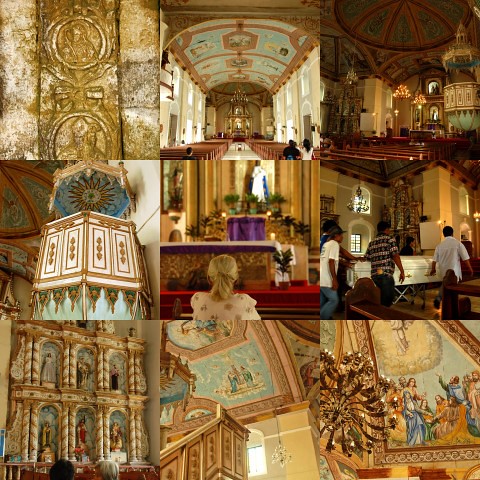
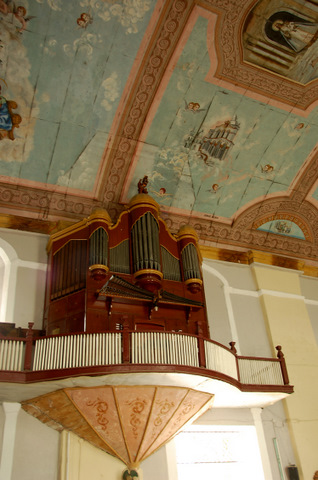
The interior of the church was bathed in natural light. It was pretty, done in pastel hues of pink and blue. The frescoes on the ceiling were beautiful and a large pipe organ immediately catches your attention from the left side. The church was empty save for a couple of old ladies knelt in prayer. Aside from being the 2nd oldest church in Bohol, it's claim to fame is the world-renowned Loboc Children's Choir, a group of 30 children with angelic voices who have won numerous competitions both locally and internationally. We weren't blessed with their voices though because they were out of town that weekend. Fortunately, my friends have hired them to sing at their wedding in September so I'll get to watch them then.

Just before we left, a hearse pulled up out front and we watched silently as casually-dressed pallbearers carried a white casket up the aisle towards the altar. The grieving family followed close behind them, and the church soon started to fill with mourners. That was our cue that it was time to go. First a wedding, now a funeral. I wondered what the other churches had in store for us.

Loboc Church collage

Loboc church interiors

#3: Our Lady of Assumption Church / Dauis Church

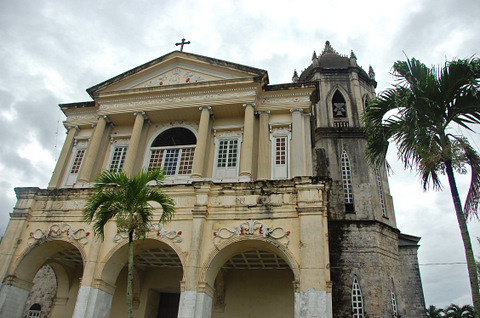
I was extra excited to see the Dauis Church because, of all the churches in Bohol, this is where my good friend, A, has chosen to have her wedding in Sept. It didn't take me to long to understand why. It was a beautiful structure, as expected, a little more modern compared to the Loboc and Bacalayon churches, but it was charming nonetheless with it's cream facade. The frescoes inside were just as impressive as the ones at the Loboc church, maybe even more so. But what made this church unique, what gave it that extra oomph, was it's location.

Dauis Church, Bohol

The church is on Panglao island, just off the bridge that takes you across from mainland Bohol. Because we arrived during the middle of a service, B and I walked towards the rear of the church to explore the grounds. I wasn't expecting to see the ocean but there it was, just beyond the grass and - are those pine trees?. I imagined how pretty it would look out there on that special night, with lights and flowers and sweet music, the September breeze playing with our hair. My heart did a little flip for A. It was going to be as stunning as she would undoubtedly look that day! :)

Dauis church collage

Dauis church and grounds

#4: Sta. Monica / Albuquerque Church

Are there certain words that you find makes you smile? Or even giggle? The name Albuquerque
does that to me. I love to hear it and I love to say it, enough to make me want to go to New Mexico just so I can go around saying it even more. Like Tlaquepaque (tuh-lah-kee-pah-kee), it's so cute, so....quirky! So imagine how amused I was when I found out we had our own little Albuquerque (referred to as Albur locally) right here in the Philippines? In Bohol at that, and with it's own proud contribution to the already very impressive roster of churches on the island.

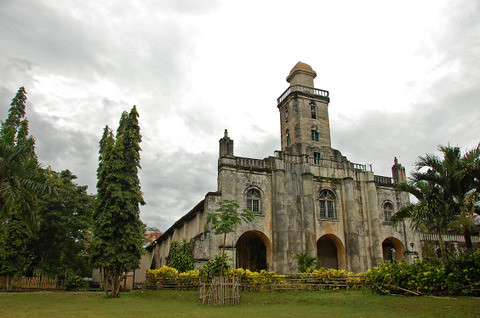
Albuquerque Church, Bohol

Albuquerque Church

So when by chance we drove past the Albuquerque church on our way to the next destination, I asked the driver to pull over. The church is built on a low knoll just along the main highway. It's facade was unlike any that I've seen in the country. The bell tower is integrated into the structure, a bridge connects the main church to the convent, a courtyard lies between, and a series of arches ties them all nicely together. But once again, our timing failed us. The church was closed so I have no idea what it looks like inside.

Albuquerque Church

The church courtyard at Albur

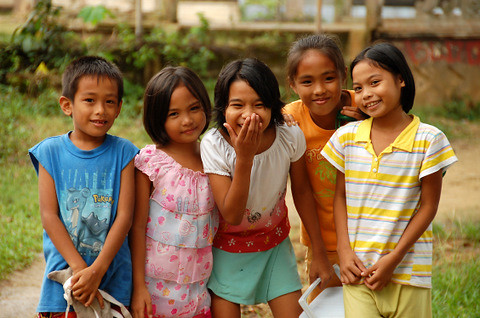
While waiting for B who was still taking pictures, I made some friends - a super cute bunch of local kids who willingly obliged me and my camera. After which they sold me some puto-maya (sticky rice treat) which they lugged inside a portable cooler. How could I resist their charm? Or sweet treats? So I bought one each for B, our driver and myself then thanked them as they continued on their way. Or I thought they did. I saw them watching us from under a tree, as the driver and I polished off every tasty grain in those banana leaves.

Boholano kids

Cute little puto-maya sellers

It's amazing the number of historic churches in this province. It would take weeks to see them all and fully appreciate each one. But like our tour of the churches in Ilocos, seeing just a fraction was enough to make me even prouder of our heritage. :)

Tour driver: Jesse Deloso ; Tel. 0919-4987649 / 0921-4489881

April 3, 2008

Feeling at home in Baclayon

Baclayon baluarte 4

Baclayon baluarte

We were met with lousy weather when our plane touched down in Tagbilaran city, the capital of Bohol. By the time we retrieved our luggage, the rains were coming down hard and I was sticky from the humidity. I started to fret that this would ruin our weekend, but quickly resolved to make the most of it. It was just rain, after all, it doesn’t bother me much. Two years in London had taken care of that.

My friend’s uncle kindly arranged for us to be picked-up at the airport and dropped-off at the Bohol Narra Homestay in the town of Baclayon, some 10 minutes from the capital. We opted for a place on the mainland instead of on Panglao island because of the nature of our trip (our main objective was to do a heritage homes/historic churches tour). The homestay was recommended by my friends who are getting married in Bohol in September. This is where they stay each time they come over to take care of wedding preparations so I knew it was clean and decent at the very least.

Clean and decent, it sure was. But more than that, our hosts were a very pleasant bunch! The rooms they rent out are separate from the main house within the family compound which is located by along the national road with a mangrove for a backyard. I’ve never been a guest at a homestay before and I have to say that it made our trip even more special.

On top of all the wonderful new experiences Bohol provided us first-time visitors, living with a local family was the cherry on the sundae. The adorable family dog kept watch outside our door every night. In the mornings, we watched from our second-floor balcony as one of the sisters tended to the garden while her brother chopped wood nearby. One of the brothers also volunteers his time as a driver for their homestay guests. Emee, the family assistant who doubled as our guide and companion on the first day, prepared our breakfast every morning in the main house.

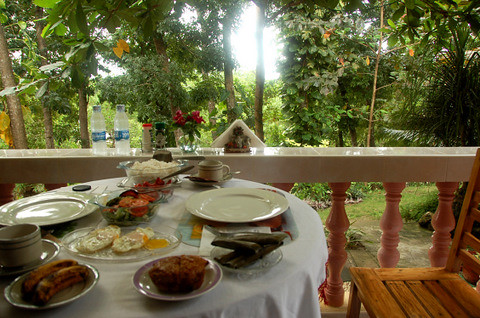
DSC_0312

Our daily breakfast feast overlooking the lush garden and mangrove beyond

It was in that cozy breakfast nook overlooking the mangrove where the Mendez sisters and Emee would later answer all our questions about their town and enlighten us about the BAHANDI or Baclayon Ancestral Homes Association, which they are a part of. I’ll go into more detail about this in another post where I'll show you some of the beautiful heritage homes we visited.

Baclayon baluarte 1

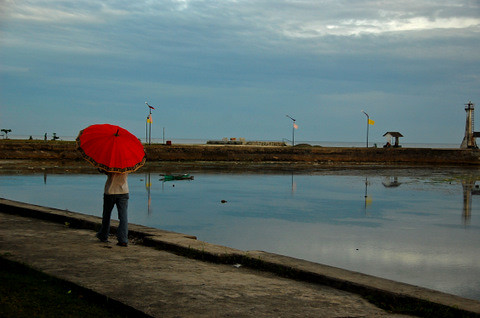
Our first order of business after we checked in was to feed our grumbling tummies. It was almost 4pm and we hadn’t had any lunch. Fortunately, the rain had let up for the day. Emee led us to her friends’ stall, aptly called Comeda del Mercado, at the Baclayon public market where we had some yummy longganisa (local sausages) and native chicken adobo with rice. The market is located in the town center right beside the famous Baclayon church and across the ‘baluarte, or wharf. After our meal and a tour of Baclayon church and museum (also for a later post), we took a stroll along the sea wall and down the baluarte.

Baclayon baluarte 3

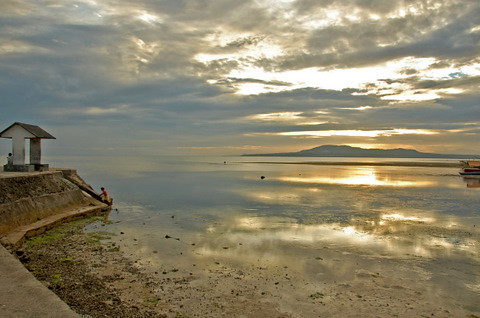
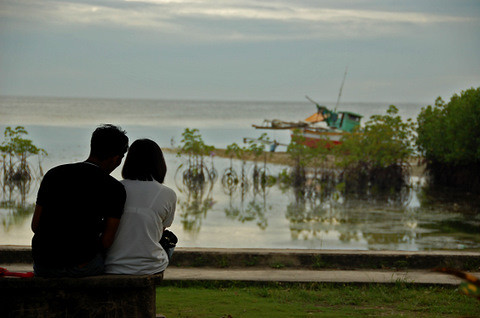
Dusk was settling in and it seemed the entire town had retired for the day, save for a couple of young romantics and a handful of locals waiting for the sunset. It was so serene out there, The only sounds were that of seagulls and the occasional bus lumbering past. The rainclouds had parted to let the sun’s last remaining rays of the day stream through, causing some of the most beautiful reflections on the water. I let out a sigh and offered up a prayer of thanks. I felt truly blessed at that moment as I always do especially when I’m traveling and experiencing more of the world’s beauty. I couldn’t wait to see what the coming days had in store for me…

Baclayon sunset


Bohol Narra Homestay
P1,200/room (max 2 pax)
Contact: Ms. Letty Mendez or Ms. Emee Abu-abo; (+63) 0906-2284477

April 1, 2008

Windows to Bohol

Windows to Bohol

After all this time, I finally got my butt to Bohol! I didn't want to wait any longer so I made reservations months ago for the Feb. 25 long weekend. I didn't even bother to wait for any of my travel buddies to book along with me. Most of my friends had already been there and I figured I'll go alone if I have to, so I was psyching myself up for that. I was surprised to find out though that a 'new old friend' had never been to Bohol either so I asked her to join me. Needless to say I was over the moon that she said yes!

You wouldn't have guessed that we were travelling together for the first time. We seemed to be on the same page the entire trip. From the onset when we both agreed to make this more of a historical/heritage trip rather than a surf-and-sea one (I'll be indulging my inner beach bum in Sept when I go back for a dear friend's wedding), and all throughout the weekend, it was just easy and we had a super great time.

For the benefit of my non-Filipino friends, Bohol is one of bigger islands (the 10th largest actually) in the Philippines' archipelago of over 7,100 islands. It's located in the Central Visayas region, just a stone's throw away from Cebu, and a quick boat ride from Dumaguete. Its claims to fame are the Chocolate Hills and the tarsier, both of which I'll post about in more detail later.

So I hope you stick around and let me share with you my Bohol experiences. :)