September 3, 2007

What country are you?

Saw this over at Nina's site.

I am Thailand. While I deny the whole bit about sexual promiscuity and disease, it's good to know that my guests cry not because my cooking is horrible. ;)

Come on, let's have some fun. It's a super short quiz, so go ahead and take it then tell me what country you are.


You're Thailand!

Calmer and more staunchly independent than almost all those around you,
you have a long history of rising above adversity. Recent adversity has led to
questions about your sexual promiscuity and the threat of disease, but you still manage to attract a number of tourists and admirers. And despite any setbacks, you can really cook a good meal whenever it's called for. Good enough to make people cry.

Take the Country Quiz at the Blue Pyramid

August 30, 2007

Something smells fishy

(Cebu: last of 4 parts)

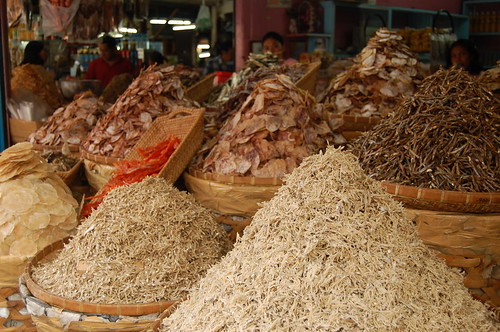
DSC_0502

Because we spent most of our time in Santa Fe, there were some places in Cebu city I didn't have the chance to visit such as the popular bagsakan (wholesale) center, the Carbon market . What I did make time for though is Tabo-an market, which is only about 10 minutes away from my brothers house. So while he settled in for a siesta, pooped after driving back from Bantayan, I borrowed his car and his housekeeper led us to the market.

I had heard about this market before so I was prepared for the mountains of dried fish or daing that was displayed before my eyes. What I wasn't prepared for was how much we would reek of fish even hours after leaving the market with our purchases vacuum-sealed in plastic and wrapped in newspaper and packed into a box. Every fiber of my being carried the stench of the sea, my hair, my clothes, even my bra! Same thing with my friend, M. We showered and scrubbed and thought we were rid of it completely, when poof , a surprise puff of the now-too-familiar funky odor greeted me when I opened my bag, and then engulfed us when we got into my brother's car the next day.

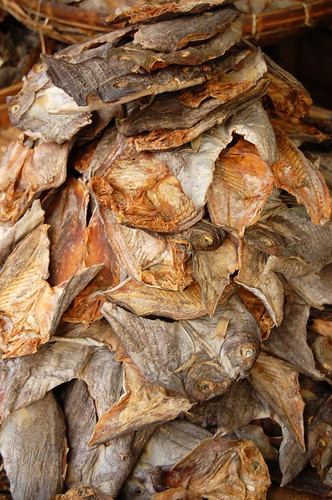
DSC_0455

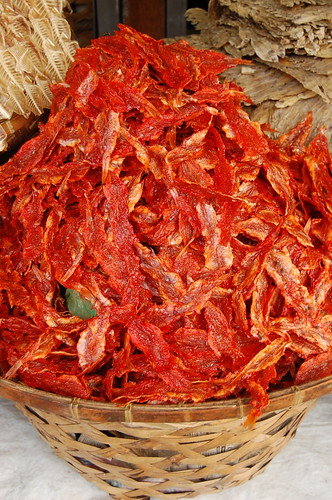
But that was ok. It was a temporary inconvenience that was well worth it. My dad loves the stuff and together with other goodies, it's a favorite pasalubong (travel gift) from Dumaguete too. So I was determined to take some home for the family and some friends. I also wanted to get more of that fish tocino which I had bought at the port of Santa Fe before boarding the Fast Craft.

For the benefit of my friends abroad, dried fish which was once the poor man's meal is now a Filipino breakfast favorite. It is fried to a crisp and served with a side of steamed or garlic-fried rice and vinegar for dipping. Like bagoong or ginamus (fermented shrimp paste), it is a nightmare for the uninitiated, especially when it is cooked in their homes because the smell has incredible staying power. My cousin's English husband banned it from their home (or at least banned them from cooking it while he was in town) after he was roused from bed one morning from the offensive (to him) aroma wafting up from the kitchen and permeating every corner of the house. Heehee. It's an acquired taste and smell for sure, but if you can get past the initial repulsion, I think you'll be pleasantly surprised.

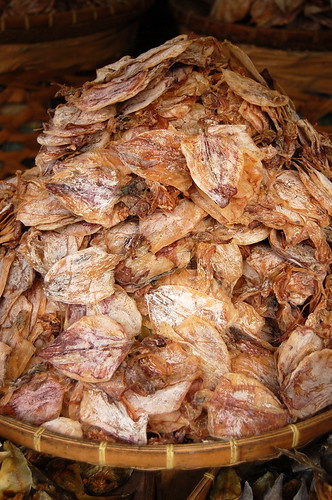
DSC_0461

dried squid

DSC_0458

fish tocino

You'll find almost every imaginable sun-dried, salt-cured fish here, piled high in abaca baskets that line the entire length of Tres de Abril St. There were piles of dried dilis (anchovy), sapsap, pusit (squid), danggit, hibe (shrimp), all available to retail and wholesale buyers. Depending on type of fish, they sell for about P200 or $4.50 (dilis) to P480 or $10.00(pusit) per kg. The stalls also carry Cebuano and Visayan delicacies like otap, dried mangos, barquillos, sampaloc, biscocho etc. making it a one-stop shop for pasalubong shopping. The sales ladies will expertly pack everything for you in boxes ready for shipping.

A great tip I learned from my brother: pack all dried fish in large brown envelopes and seal with tape. The smell is contained within, so you could actually put it in your suitcase if you don't want to bother checking-in an extra box at the airport.

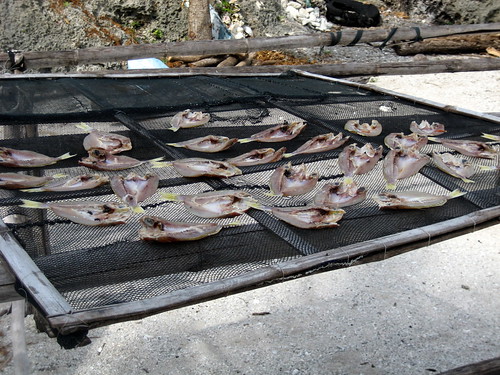
Drying Fish

I stumbled upon these fish being sun-dried at Virgin Island near Bantayan

DSC_0555

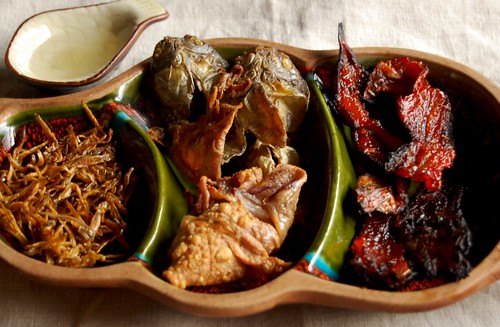
Our breakfast back in Manila the day after I arrived home
left to right: dilis, danggit and pusit, and my favorite fish tocino

DSC_0584-1

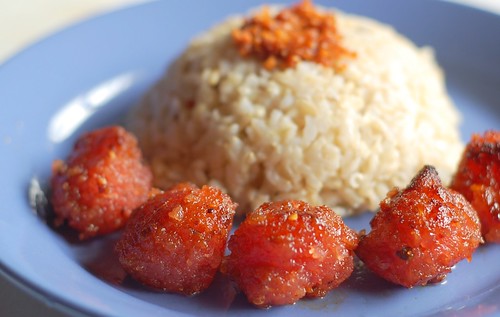
Cebu longganisa ; another breakfast courtesy of Tabo-an market

EYC Marketing, Dried fish dealer
Stall #71-72; Tabo-an Market
Tres de Abril St., Cebu City
Tel. (032) 261-4307; 2627414

August 28, 2007

Santa Fe snapshots

(Cebu: Part 3 of 4)

DSC_0308

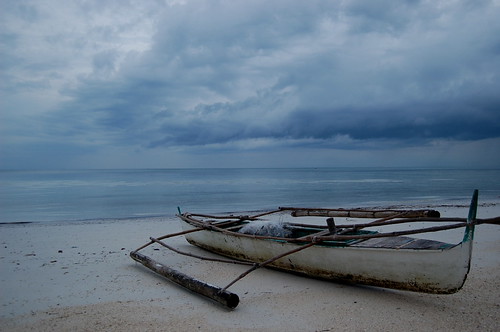
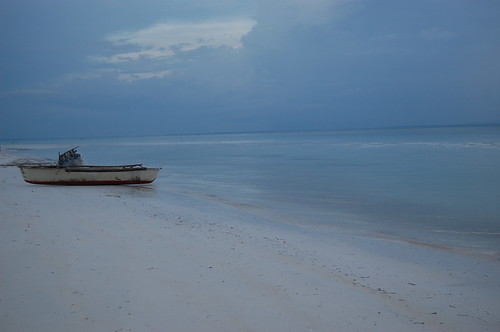
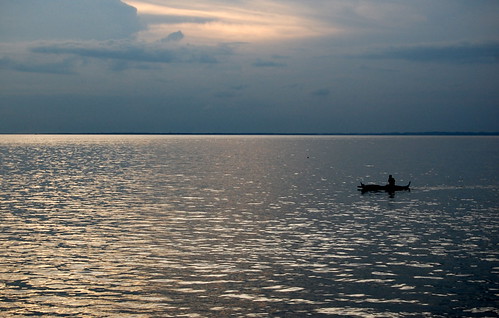
Sante Fe is a small fishing village located on the southeast coast of Bantayan island. It is a place time seemed to have momentarily forgotten. The beaches are beautiful and unspoilt, and perhaps because it was low season, the only other life on the shores were fisherfolk and stray dogs. The beach at dusk was almost surreal. Everything turned a deep blue and you could barely make out the horizon. One evening as we walked the stretch of the beach, there was a dark rain cloud moving towards us which only added drama to the sky.

There isn't much to say about the night life here, at least not on that particular weekend. There were no shtoog-shtoog beats, just more more terribly amusing karaoke. We spent our nights getting massages, riding pedicabs, chatting over fresh seafood and succulent mangos, and then drifting off to the sound of the tropical rain against our windows and on the roof. I slept long, the peace I felt being here cloaked me in my slumber.

DSC_0312

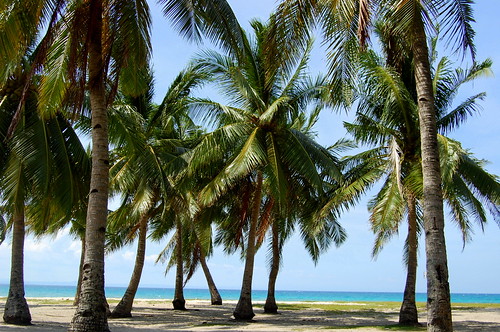
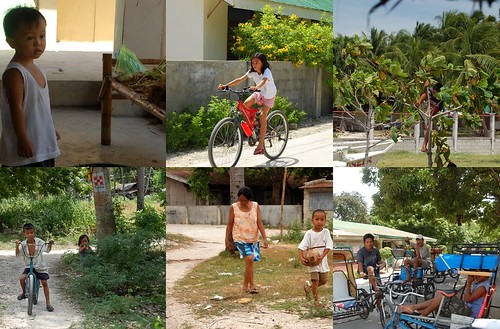
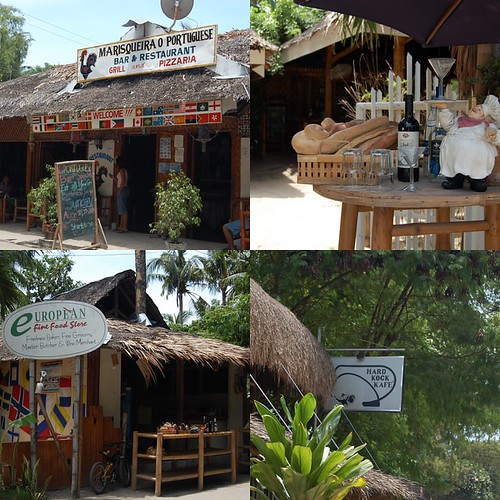
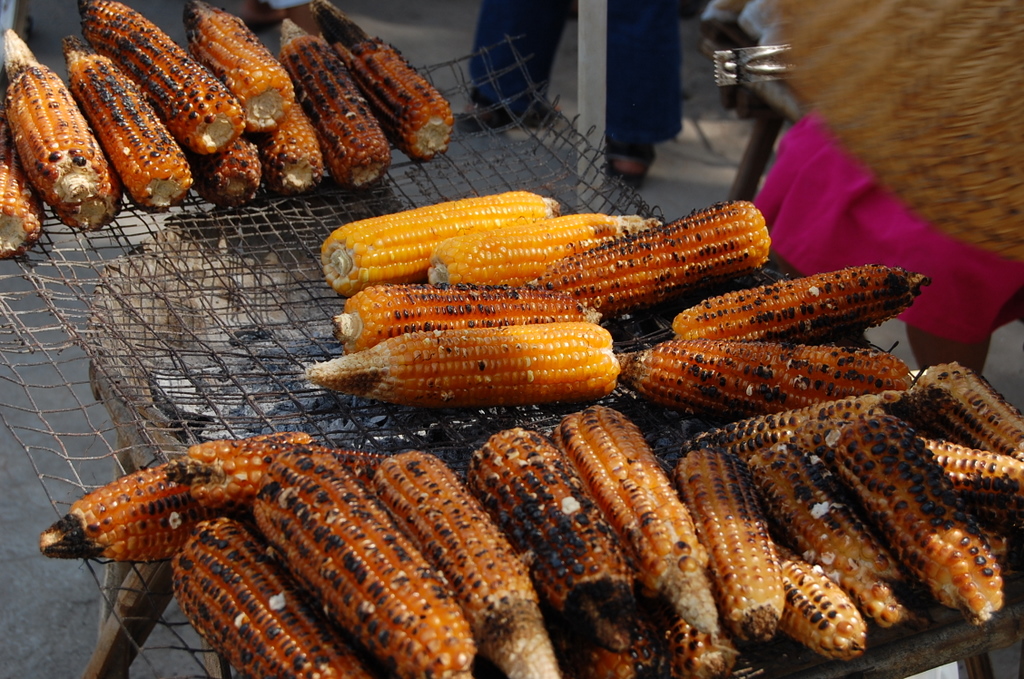
One afternoon after a boat ride to nearby Virgin island for some snorkling, we rented a motorcycle and set out to explore inland. The town was idyllic and incredibly charming. Our half hour ronda around the island brought us to old Colonial homes, a Thai massage place, an old man selling "tempura" (stretched fish balls) outside a European deli, two small girls playing on the side of the road amidst coconut trees, a very interesting-looking cemetery, a tourist information office, a church, a cluster of islanders perched on their sidecars waiting for passengers, and a woman grilling corn at the market. People we passed waved at us, they seemed to be smiling all the time. They had plenty to smile about.

We stopped at the European deli for a drink and walked over to a souvenir shop. Two foreigners who were chatting outside a Portuguese restaurant greeted us and volunteered that the food there was excellent. We chatted for a bit and when they found out it was our first time on the island, the shorter of the two looked at us seriously and said, "God lives here. I don't know what he does elsewhere, but He lives here." I don't doubt it. :)


DSC_0287

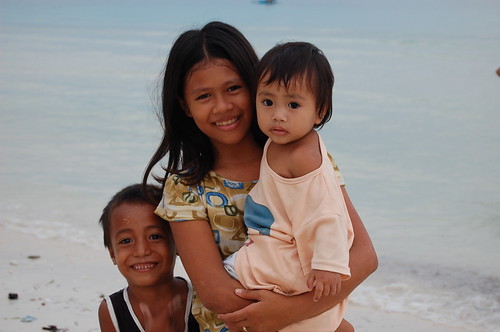
Beautiful fisherman's children

DSC_0120

collage5

Islanders

DSC_0096

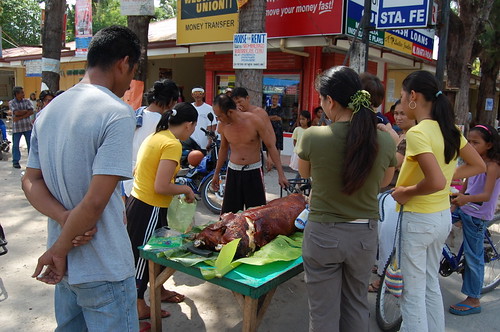
Lechon, outside the public market on a Sunday morning

collage14

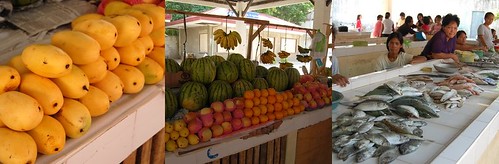
Fresh fish and fruit at the market

DSC_0237

Beautiful old house

DSC_0112

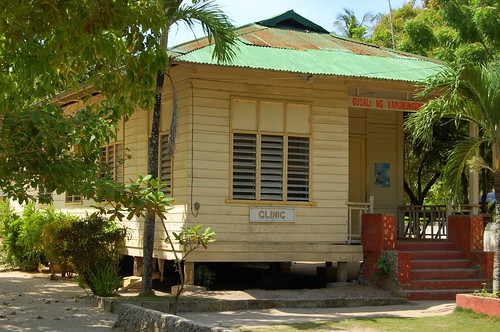
Clinic

DSC_0116

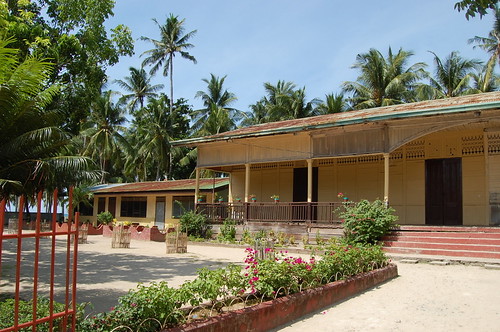
School

August 24, 2007

Do you know the way to Santa Fe?

(Cebu: Part 2 of 4)

"So, are you feeling adventurous?", Woody asked my friend and I during brunch at his apartment Saturday morning. "Yes!", I replied a little too loudly, almost spilling my tea in the process, "Why what's the plan?". "Let's go to Bantayan", he replied.

Less than two hours later we were on the road heading towards the northern tip of Cebu island where we would take the last ferry across to Santa Fe. I road shotgun and played the role of navigator, wrestling with the huge map . It was making me dizzy and I tried my darndest not to do a Linda Blair all over the dashboard. I shouldn't have drank so much wine the night before. Thankully the roads were good and the countryside was beautiful. It helped ease the throbbing in my temples. Every so often, I caught a glimpse of the sea through the coconut trees outside my window.
collage10

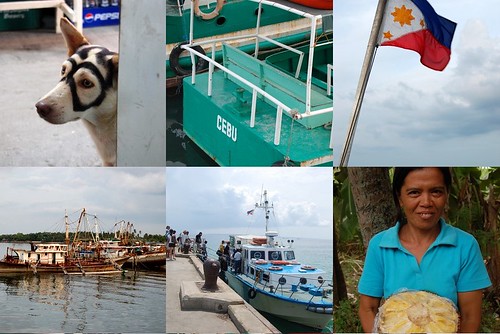
We reached the Hagnaya port at San Remigio with time to spare. We parked the car in a secured lot then proceeded to the booth to purchase our ferry tickets (P 168.00 or $3.50 for a one way ticket). We were starving, we had nothing but potato chips since brunch. Before boarding, the three of us managed to consume 4 hotdogs on sticks, 6 pork BBQs, one puso, 2 torta cebuanas, a couple of spanish breads, and more cheese bread from nearby Julie's bakeshop. Our scraps were happily lapped up by a poor dog that someone with a marker, who obviously had nothing better to do with his time, had some fun with.

We bought tickets for first-class, which is nothing more than a small stuffy airconditioned cabin. A Jackie Chan movie played on TV while my brother tried to sleep despite the combined noise of the TV, the boat's engine, the drone of the ancient A/c unit, and the screaming baby. I stayed on deck mostly, taking pictures of passing fishing boats and watching the setting sun cast pretty colors across the sky.
DSC_0040

It was dark when we docked at Santa Fe. Walking along the catwalk of the pier, I could hear the unmistakable sounds of karaoke in the distance, a sound that would later become much too familiar while we dined in the island's restaurants. A long-limbed foreign man sat on the sidewalk and watched the influx of arriving passengers, lifting his Gold Eagle Beer mucho at us in salutation.

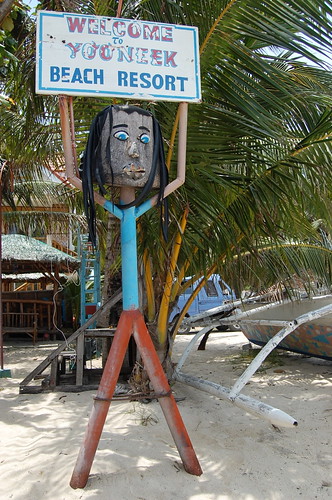
Because Woody had previously stayed at Yooneek Resort and had stayed in touch with Juan, the Japanese-Peruvian owner and his charming Filipina wife, Bernie, this is where we opted to stay as well. We hired two pedicabs and made our way to the resort. The farther away we were from the port, the quieter and darker it got. The terrible karaoke singing faded away and

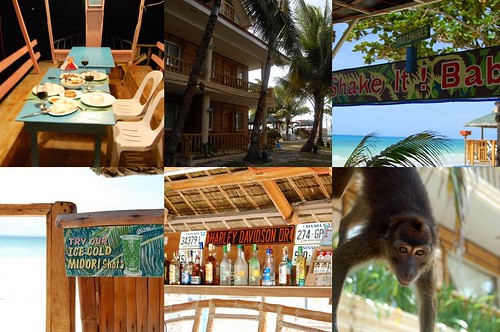
We were welcomed with a nice dinner spread and wine (see first photo in collage below) in one of the resort's cabanas that was formerly a banka (outrigger). Bernie and Juan were having their regular weekend cocktails with friends - more foreigners who had left big towns and busy lives for the slow island life. Everyone on the resort staff exuded warmth and cheerfulness and made sure we had a pleasant visit.
DSC_0219

I counted six rooms, three on each floor and Bernie and Juan's private space on the third. The rooms are big and very clean. I love how the balcony, walls and interiors including furniture are made of bamboo. It was rustic and charming, just how I like it. We were given the room with the view of the ocean on the second floor. It had a small TV, a fridge and a private balcony that opened up to the coconut grove where we could hang our towels and wet clothes.

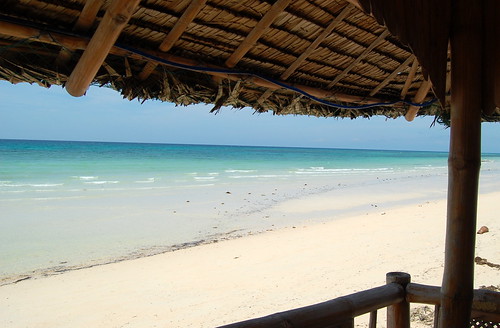
Although there is a restaurant and bar across the rooms, it was hardly ever used. Most people, us included, ate their meals outside. How could you sit inside when you could sip your fruit shake and eat your longsilog (typical Filipino breakfast of cured sausage, fried egg and garlic fried rice) and juicy mango staring out into the blue green sea while the ocean breeze caresses your hair?
DSC_0167

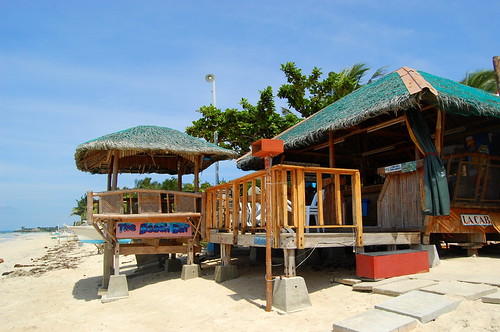
And that leads us to my favorite part of the resort. The beach bar (above & below). Like a scene straight out of Cocktail, waitresses serve tropical drinks from behind the bar as latin and reggae beats played all day and night. But it was in the mornings that I loved it most. It was dreamlike. My favorite meal of the day was brought to us here, and in this most calming of environments we awoke slowly. Letting the sound of waves lapping on the shore and the trees ruslting in the breeze and the salty-fishy smell in the air coax our senses out to play.
DSC_0143


collage12

Yooneek Beach Resort
Santa Fe, Bantayan, Cebu Island
Tel. (+6332) 4389124
Mobile (+63-917) 999 3829

Regular room rate: about $55 per night

August 23, 2007

A city of firsts

(Cebu: Part 1 of 4)

DSC_0387

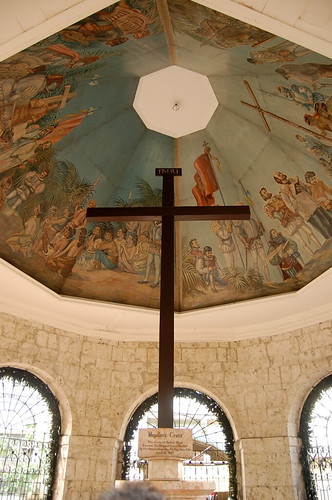
Magellan's Cross
My favorite brother, who just happens to be my only brother, moved to Cebu from Bacolod a few months ago. I had been meaning to visit him much earlier to help fix up his place but unfortunately never got around to it. I did finally manage to make it down to that Queen City of the South for the long weekend with a friend in tow. We almost didn't make it though. A typhoon raged on outside while we sat in the lounge of the Manila domestic airport. Rain whipped the glass windows and we couldn't see the tarmac and the wind howled angrily. I assured my friend (myself, really) that we would be alright, that most plane crashes were caused by mechanical failure and not bad weather. Whereever did I get that anyway? Some of the earlier flights were cancelled, but thankfully ours was only delayed by a little over an hour.

At last, at almost 10 pm we touched down in Cebu and soon after my brother, who answers to Woody by the way, whisked us off to Arano's where friends and food were waiting patiently for us. Even though I get to see my bro often (he comes home about twice a month) it was still see nice to him. He is 11 years my senior (he'll kill me for saying that!) but that never kept us from being very close. He takes immense pleasure in teasing me, and I indulge him. Not that I have much of a choice, really. But when he wasn't picking on me, I couldn't complain. He was good to us and a model son to my parents. And seriously, anyone who can put up with four bratty younger sisters and their quirks is a saint in my book!

So here I was in his brand new home. It was hard to believe it had been almost 8 years since my last real visit to Cebu. By "real visit" I mean not one where I was just passing through, in transit between islands. I had nothing planned for the next three days, which is a little unusual for me. I felt I didn't have to draw up an itinerary this time, thinking we would take it easy and let the wind carry us where it wanted.

DSC_0410

Basilica del Santo Niño

To kick off this Cebu series, I thought I would start with the city's most famous landmarks: Magellan's Cross and Basilica del Santo Niño. So here is your history lesson (or review) for the day:

The city of Cebu is the oldest in the Philippines. Among it's many claims to fame are: the nation's first street (Colon), first church (Santo Niño), first fort (Fort San Pedro), and first school (San Carlos). It was here where Portuguese explorer Ferdinand Magellan suffered his fate under the sword of Lapu-Lapu shortly after his arrival in 1521, in what came to be known as the Battle of Mactan.

What you see in the picture above is the cross Magellan left behind. It is encased in tindalo wood and housed in a shrine commemorating the early Filipino Christianization and the archipelago's first encounter with the West. Nearby is the Basilica del Santo Niño which was erected by Augustinian Fathers in 1565 making it the first church in the Philippines. It was built as a home for the country's oldest religious relic, an image of the Santo Niño or Holy Infant Jesus. The statue is considered miraculous and a blessed replica can be found in practically every Cebuano household, store, and vehicle.

DSC_0439

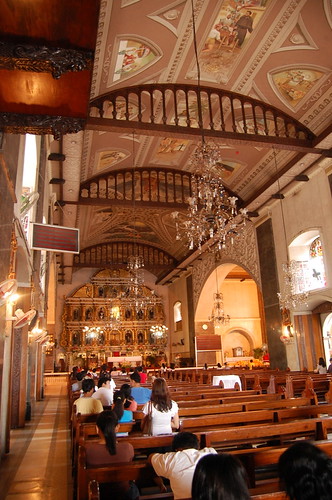
On this day, devotees are seen queueing up to see the Image, kneeling in quiet prayer, giving alms, and lighting candles. Outside, children beg for change while their elders hawk their wares. It was a typical day at the Basilica.

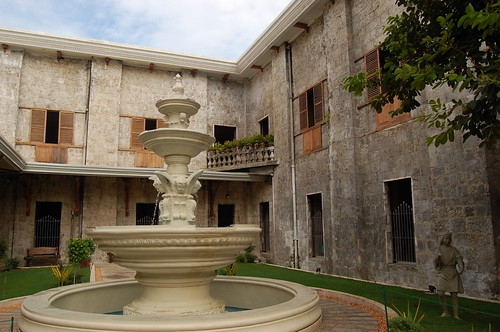
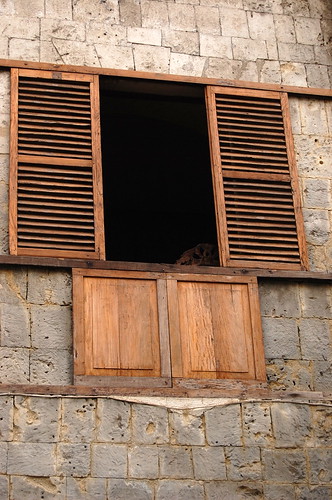
So there you have it. Isn't it pretty? Before I end this post, I'll leave you with a few more snapshots taken at this beautiful stone church.


DSC_0431

DSC_0423

DSC_0382